
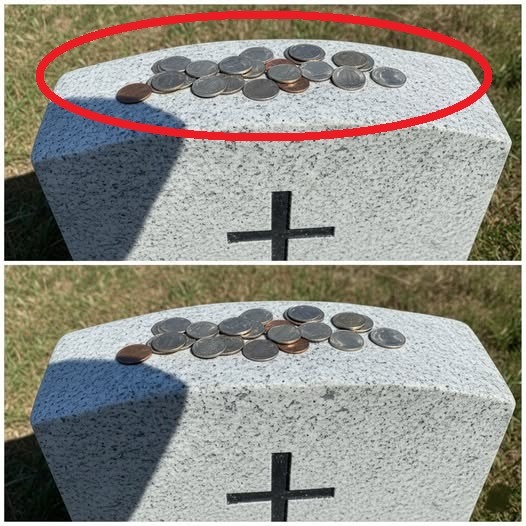
You’ve seen them—small, glinting in the sun on a weathered headstone: a penny, a nickel, maybe a quarter. At first glance, it might seem like litter or a careless drop.
But in truth, every coin left on a grave is a deliberate message—a quiet, powerful act of remembrance with deep roots in military tradition and human compassion.
💰 The Origins: A Gesture Born of Respect and Discretion
The practice became especially widespread during the Vietnam War, a time of intense political division. Many Americans felt conflicted about the war, and visiting the grave of a fallen soldier could draw unwanted attention or even hostility.
So veterans and loved ones developed a silent code:
Leave a coin. Say you were there. Honor the dead—without words.
It was discreet, respectful, and deeply personal. No flowers to wilt. No note to misinterpret. Just a small token that said: “I remember you.”
🪙 What Each Coin Means
The denomination isn’t random—it carries specific meaning:
What Each Coin Means
The denomination isn’t random—it carries specific meaning:
Penny → “I visited. I remember you.”
The most common offering. It says: Your name was read. Your life mattered—even to a stranger.
Nickel → “We trained together.”
Left by someone who shared boot camp or basic training with the deceased.
Dime → “We served together.”
Indicates the visitor was in the same unit or deployed alongside the fallen.
Quarter → “I was with you when you died.”
The most solemn offering. Often left by a fellow soldier who witnessed the death—a profound act of witness and grief.
In some traditions, a challenge coin (a special unit medallion) may also be left as a high honor.
For Complete Cooking STEPS Please Head On Over To Next Page Or Open button (>) and don’t forget to SHARE with your Facebook friends
ADVERTISEMENT

