
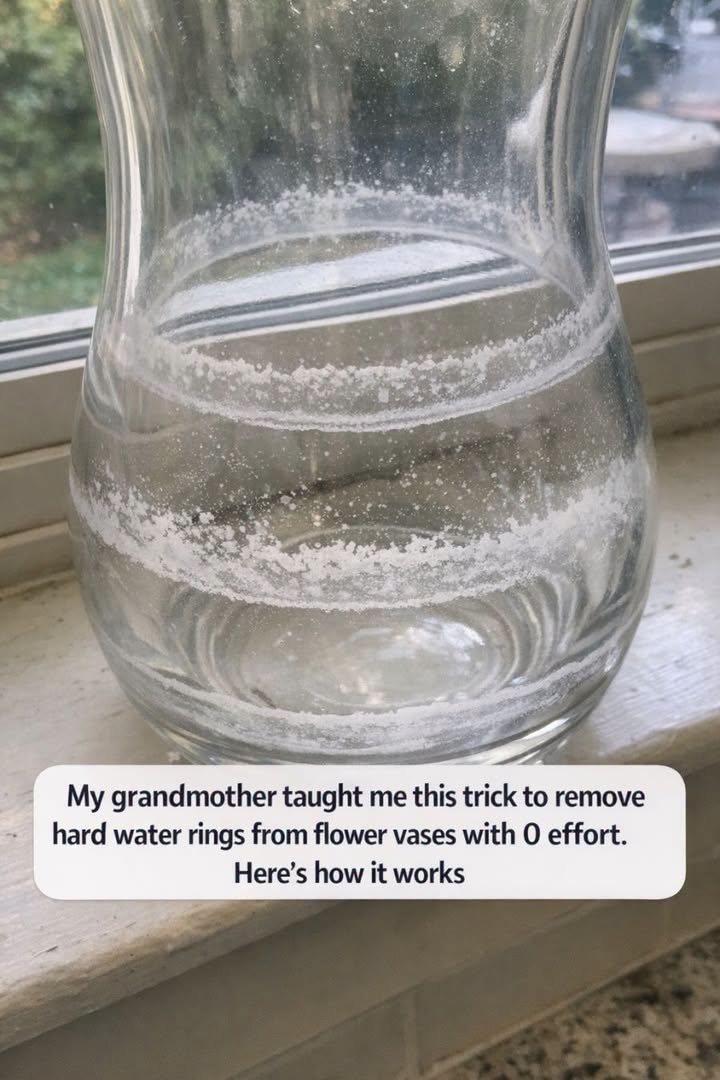
Every flower lover knows the frustration of admiring a beautiful bouquet only to find unsightly rings forming on the inside of their vases. These hard water rings can turn even the most pristine glass into a cloudy mess. While scrubbing seems like the obvious solution, it often falls short, leaving you with tired hands and stubborn stains that refuse to budge.
My grandmother, a seasoned gardener with a knack for keeping things effortlessly immaculate, shared with me a simple trick to make those hard water rings disappear without any scrubbing at all. Her method is as ingenious as it is easy, relying on a common household item that you’ll find in any pantry. Read on to discover how she kept her vases sparkling with minimal effort.
1. The Surprising Culprit Behind Those Cloudy Vase Rings
Hard water stains are primarily caused by the high mineral content in tap water, particularly calcium and magnesium. When water evaporates from a vase, these minerals are left behind, forming a white, chalky residue. This residue can build up over time, creating those persistent rings.
In some areas, water is ‘harder’ than in others, meaning it has a higher concentration of these minerals. If you live in such a region, you’re likely no stranger to these rings not just in vases but also in sinks and showers. Understanding this helps us tackle the problem at its source.
2. The Simple Pantry Staple My Grandmother Swore By
The secret to my grandmother’s cleaning trick is none other than white vinegar. This humble ingredient boasts impressive cleaning prowess due to its acetic acid content. At around 5% acidity, white vinegar is strong enough to dissolve mineral deposits without damaging glass surfaces.
Vinegar’s acidic nature makes it perfect for breaking down the alkaline minerals that form hard water stains. It’s also non-toxic and environmentally friendly, making it an excellent alternative to harsh chemical cleaners.
3. Why This Trick Works When Scrubbing Doesn’t
Scrubbing might seem like the best option, but it often only manages to tackle the surface of the mineral deposits. The texture of the stains can be stubborn, sometimes even etching into the glass, making them more challenging to remove with friction alone.
Vinegar, on the other hand, uses chemistry to its advantage. The acid in vinegar reacts with the alkaline minerals, dissolving them completely and preventing the need for physical abrasion. This means you can achieve a spotless finish without risking scratches on your vase.
For Complete Cooking STEPS Please Head On Over To Next Page Or Open button (>) and don’t forget to SHARE with your Facebook friends
ADVERTISEMENT

