
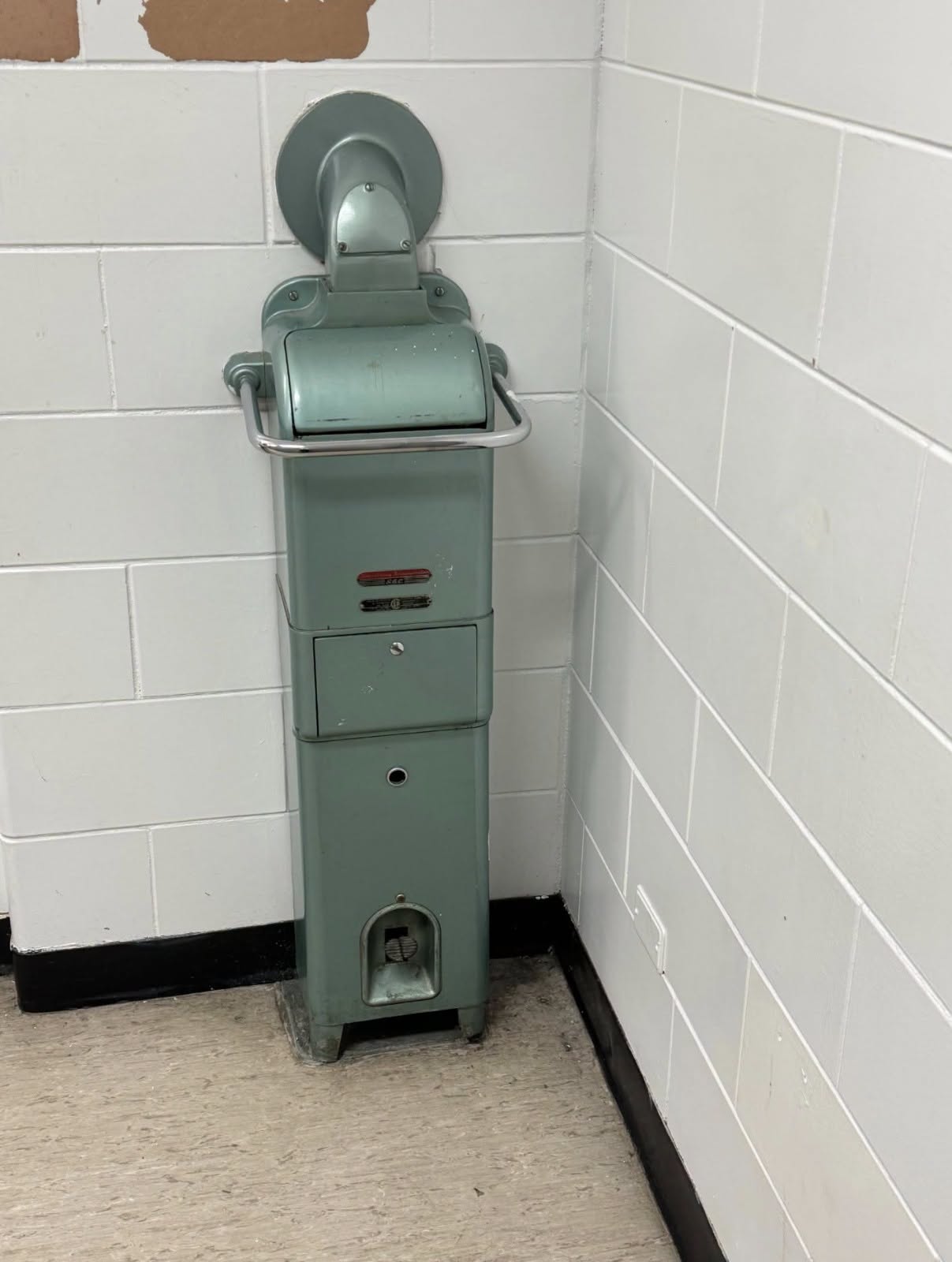
After seeing an old metal trash incinerator in a school restroom, I started to think about this topic. The incinerator looked heavy, clumsy, and menacing. The type of fixture that would make you pause for a moment to consider what people were doing at that time.
When I began to research this heavy iron relic, I found that the incinerator was part of something much larger. It wasn’t just a strange piece of plumbing; it was a window into a completely different era of daily life.
In the past, trash incinerators were incredibly popular because people wanted their garbage disposed of quickly, and burning it seemed like the ultimate quick fix. But to understand why a massive, menacing metal box was once a standard feature in our schools, hospitals, and homes, we have to look at the world through the eyes of our ancestors.
Let’s open the heavy iron door of history and explore the forgotten relic of the trash incinerator.
🚪 The Menacing Metal Box: What Exactly Was It?
If you’ve ever stumbled upon an old incinerator in the basement of a historic school, a janitor’s closet, or an old apartment building, you know exactly how it looks.
It is a heavy, cast-iron or steel box, often built directly into the brickwork or masonry of the wall. It features a thick, clumsy metal door with a heavy latch, and inside, a cast-iron grate where the trash would rest over the flames.
Why Did It Look So “Menacing”?
Feature
Purpose
Why It Looks Scary Today
Heavy Iron Door
To contain intense heat and prevent fires from escaping.
Looks like a vault or a furnace; requires significant physical strength to open.
Thick Metal Grate
To hold the trash while allowing ashes to fall into a collection bin below.
Resembles the grates of a dungeon or an industrial forge.
Soot-Stained Brick
The masonry surrounding it would often be blackened from years of use.
Gives it a dark, ominous, and industrial aesthetic.
Deep Firebox
Designed to reach incredibly high temperatures to reduce trash to ash.
The dark, empty interior triggers a primal fear of fire.
To modern eyes, it looks like a torture device or an industrial furnace. But to the janitors, superintendents, and homeowners of the early 20th century, it was simply a highly practical, everyday tool.
For Complete Cooking STEPS Please Head On Over To Next Page Or Open button (>) and don’t forget to SHARE with your Facebook friends
ADVERTISEMENT

