
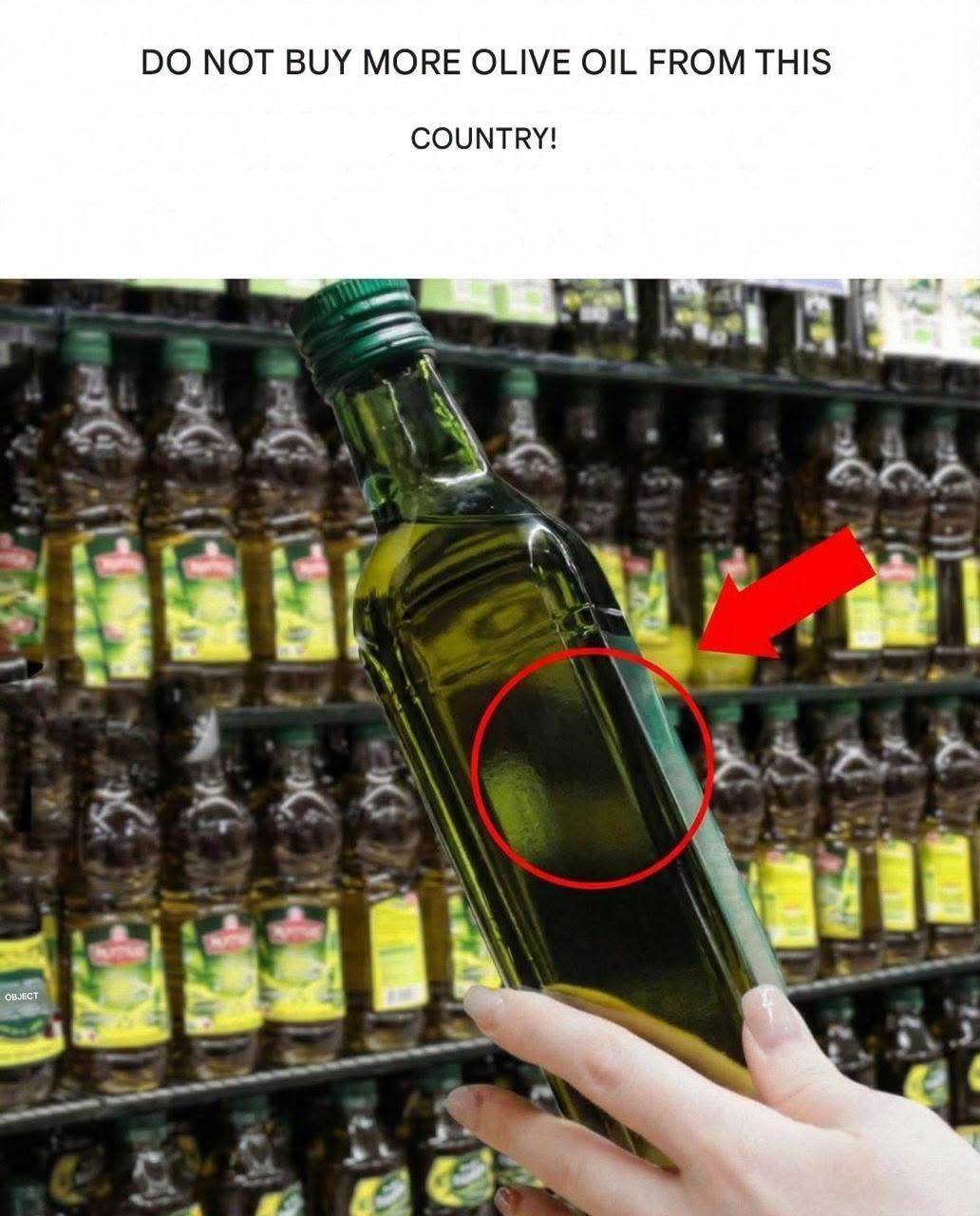
Imagine yourself in the kitchen, ready to drizzle a little olive oil over your dish, confident you’re making a healthy choice. But what if that oil holds a disturbing secret? Today, we’re exposing the scale of olive oil fraud and the countries most affected. You’ll also learn how to spot counterfeit olive oil and choose real extra virgin olive oil to protect your health.
A massive scam that threatens your health
Olive oil is the most adulterated food product in the world. According to experts, up to 80% of olive oils available at retail are fake or adulterated. This means they contain mixtures of cheaper oils, undeclared additives, and even chemical solvents.
This phenomenon isn’t just a quality issue; it poses a real health risk. Regular consumption of adulterated olive oil can lead to nutritional deficiencies, inflammation, and an increased risk of chronic disease.
Why is olive oil so frequently counterfeited? High demand and production costs make it an ideal target for counterfeiters. Producing genuine extra virgin olive oil requires a long and rigorous process, leading some producers to deceive consumers by selling low-quality products under false labels.
Top 10 Countries Most Affected by Olive Oil Fraud
If you are buying olive oil from one of these countries, be especially vigilant:
10. Portugal
Although Portugal is not a large producer, about 10% of its olive oil exports are adulterated . They are often blended with lower-quality oils or contain undeclared additives.
9. Argentina
Argentina is an emerging player in the market, but 17% of its olive oil is adulterated , often with lower-quality vegetable oils. Be wary of prices that seem too good to be true and look for official certifications.
8. Morocco
In recent years, olive oil production in Morocco has increased dramatically, but 15% of the cheaper olive oil is adulterated , often mixed with cheaper vegetable oils due to a lack of strict regulations.
7. Greece
Renowned for its ancient olive groves, Greece is not immune to fraud: 20% of its olive oil exports are adulterated . Mixing with other oils or misleading labeling are common practices. Look for labels with the PDO ( Protected Designation of Origin ) designation.
6. Türkiye
Turkey, a major producer, also faces widespread fraud: 30% of its cheap olive oil is adulterated . Some batches contain unlabeled preservatives, increasing the risk of liver disease and inflammation.
5. Tunisia
Tunisia, one of the world’s main exporters, mixes 15% of its olive oil with oils such as sunflower or soybean oil , which can cause allergic reactions and harm health.
4. Egypt
Due to the rapid increase in production, Egypt is facing a serious quality control problem: 20% of the olive oil sold contains additives or chemical solvents that are harmful to the liver .
For Complete Cooking STEPS Please Head On Over To Next Page Or Open button (>) and don’t forget to SHARE with your Facebook friends
ADVERTISEMENT

