
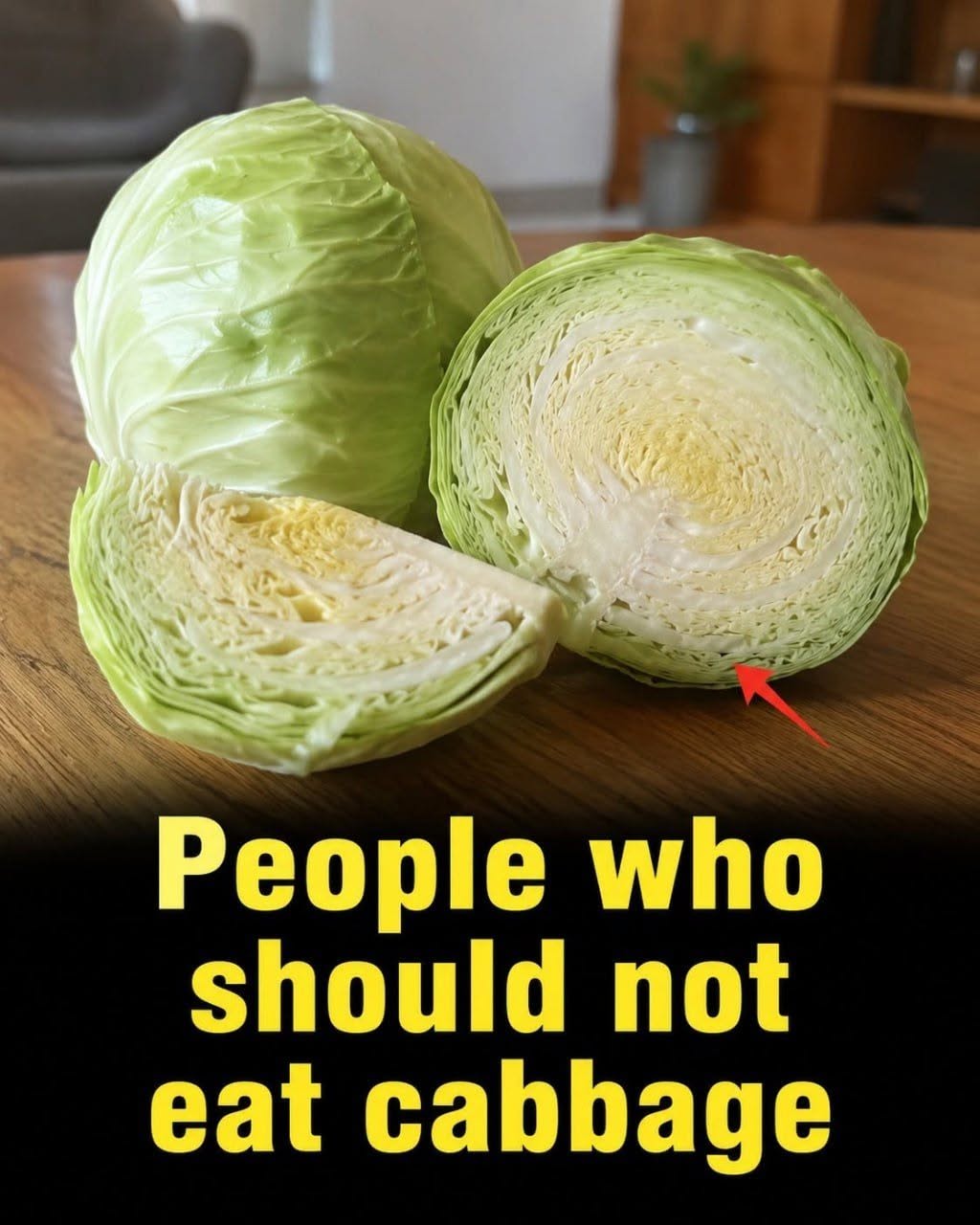
While one person may enjoy large servings without any issue, another may experience bloating, gas, or interactions with medications.
The key is understanding whether you belong to one of the groups that may need to approach cabbage with a bit more caution.
People with Thyroid Conditions Should Be Mindful
One of the most commonly discussed concerns surrounding cabbage involves its content of substances known as goitrogens.
Goitrogens are naturally occurring compounds found in many cruciferous vegetables. In very large amounts, especially when consumed raw, they may interfere with the body’s ability to use iodine efficiently.
Iodine plays an essential role in thyroid hormone production.
For individuals with hypothyroidism or existing thyroid disorders, excessive consumption of raw cabbage may not be ideal.
Fortunately, cooking significantly reduces many of these compounds.
Most people with properly managed thyroid conditions can continue eating moderate amounts of cooked cabbage without problems, but it’s always wise to consult a healthcare professional for personalized advice.
Continue to the next page to discover additional groups who may need to adjust how they consume cabbage and learn simple ways to make it easier on the digestive system.
Individuals Taking Blood-Thinning Medications
Cabbage is particularly rich in vitamin K, a nutrient that plays a critical role in blood clotting.
While vitamin K is essential for good health, it can affect the way certain blood-thinning medications work.
People taking medications such as warfarin are often advised to maintain a consistent intake of vitamin K-containing foods.
The concern is not necessarily eating cabbage itself but making sudden, dramatic changes in consumption.
For example:
Eating very little cabbage one week and large amounts the next
Starting a cabbage-heavy diet unexpectedly
Completely eliminating vitamin K-rich foods without medical guidance
Consistency helps healthcare providers properly manage medication dosage.
People with Irritable Bowel Syndrome (IBS)
If you’ve ever felt bloated after eating cabbage, you’re not alone.
Cabbage contains certain carbohydrates known as FODMAPs, particularly raffinose, which can be difficult for some digestive systems to process.
Individuals with IBS may experience:
For Complete Cooking STEPS Please Head On Over To Next Page Or Open button (>) and don’t forget to SHARE with your Facebook friends
ADVERTISEMENT

