
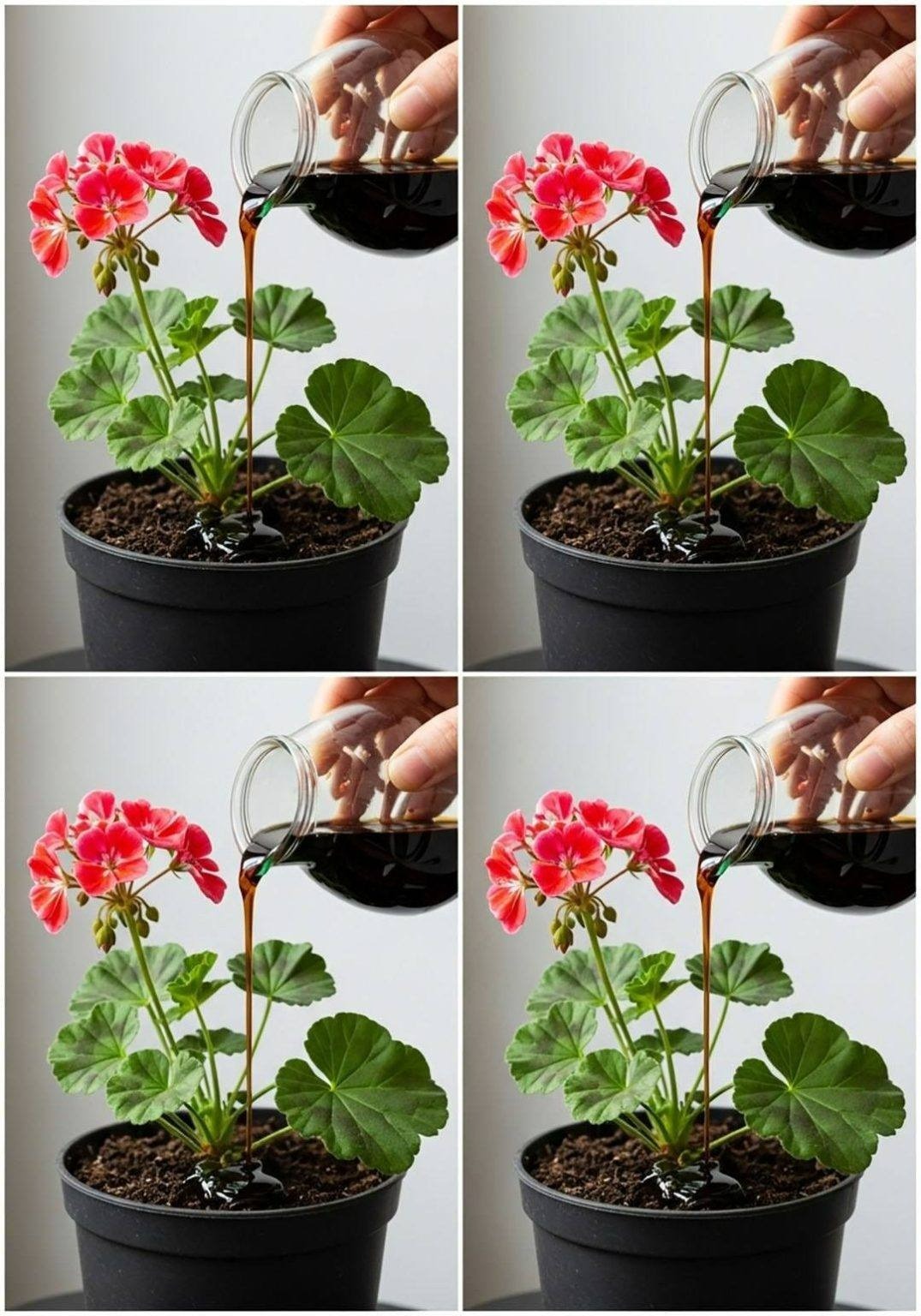
Geraniums are sun-worshippers. They need at least 6 hours of direct sunlight daily to produce abundant blooms.
What happens in too little light: The plant becomes “leggy” (long, weak stems with widely spaced leaves). Flowering slows dramatically or stops entirely.
What to do: Place geraniums in your sunniest spot. South- or west-facing windows are ideal. If you’re growing outdoors, choose a location with morning sun and afternoon protection (in very hot climates).
Pro tip: Rotate containers every few weeks so all sides of the plant receive equal light.
2. Deadhead Religiously (The #1 Secret)
This is the most important thing you can do to encourage continuous blooming.
What is deadheading? Removing spent (faded) flowers before they go to seed.
Why it works: Geraniums bloom to reproduce. Once a flower is pollinated and begins forming seeds, the plant gets a signal: “My work here is done.” It stops producing new flowers. By removing spent blooms, you trick the plant into thinking it hasn’t succeeded yet, so it keeps producing more flowers.
How to deadhead: Pinch or snip off the entire flower stem, not just the faded petals. Follow the stem down to where it meets the main branch. Remove it cleanly.
How often: Every few days during peak blooming season. It takes seconds.
3. Prune Leggy Growth
Geraniums can become leggy, especially if they’re not getting enough light or if they’re older plants.
What to do: Cut back long, straggly stems by about one-third. Make cuts just above a leaf node (where a leaf attaches to the stem). This encourages branching, which leads to more flowers.
When to prune: Early spring (before the growing season) and again in mid-summer if plants look tired.
Don’t be afraid: Geraniums are tough. They bounce back quickly from pruning.
4. Fertilize Regularly (But Not Too Much)
Geraniums are moderate feeders. They need nutrients to produce abundant blooms.
What to use: A balanced, water-soluble fertilizer (like 10-10-10 or 20-20-20). Or use a fertilizer specifically formulated for flowering plants (higher phosphorus, like 10-20-10).
How often: Every 2-3 weeks during the growing season (spring through early autumn).
Important: Do not over-fertilize. Too much nitrogen (the first number) encourages leaf growth at the expense of flowers. If your geraniums are lush and green but not blooming, you’re likely using a fertilizer that’s too high in nitrogen.
Pro tip: Use a slow-release fertilizer at planting time, then supplement with liquid fertilizer every few weeks.
5. Water Consistently (But Don’t Drown Them)
Geraniums prefer to dry out slightly between waterings. They’re drought-tolerant but not drought-loving.
The test: Stick your finger about an inch into the soil. If it feels dry, water. If it’s still moist, wait.
Signs of overwatering: Yellowing leaves, wilting (ironically), root rot, fungal diseases.
Signs of underwatering: Drooping leaves, brown leaf edges, slow growth.
Pro tip: Water at the base of the plant, not over the leaves. Wet leaves can lead to fungal diseases.
6. Bring Them Indoors Before Frost (Year-Round Blooms)
Geraniums are not frost-hardy. A single freeze will kill them.
What to do: Before the first frost, bring your geraniums indoors. Place them in a sunny window (south-facing is best). Reduce watering (they need less in winter). Stop fertilizing.
Will they bloom indoors? Yes, with enough light. If your windows don’t provide enough sunlight, supplement with a grow light.
Come spring: Gradually reintroduce them to the outdoors after the danger of frost has passed.
7. Repot When Necessary
Geraniums don’t mind being slightly root-bound, but if they’re severely pot-bound, flowering will suffer.
Signs it’s time to repot: Roots growing out of the drainage holes, water running straight through without soaking in, stunted growth.
When to repot: Early spring, just before the growing season.
Pro tip: Use a pot with drainage holes. Geraniums hate sitting in water.
Troubleshooting: Why Aren’t My Geraniums Blooming?
Let me help you diagnose common problems.
Problem Likely Cause Solution
No blooms, lush green leaves Too much nitrogen (over-fertilizing) Switch to a low-nitrogen, high-phosphorus fertilizer
Leggy growth, few flowers Not enough light Move to a sunnier location
Few flowers, yellowing leaves Overwatering Let soil dry out between waterings
No blooms, stunted growth Pot-bound Repot into a slightly larger container
No blooms in winter Normal (if light is insufficient) Add grow lights or wait for spring
Flowers are small and sparse Not enough fertilizer Start a regular fertilizing schedule
Overwintering Geraniums (3 Methods)
You don’t have to let your geraniums die in winter. Here’s how to keep them alive.
Method 1: Bring the Whole Plant Indoors
Dig up or bring in containers before the first frost.
Place in a sunny window (south-facing preferred).
Water sparingly (once every 2-3 weeks).
Stop fertilizing.
Come spring, prune back leggy growth, repot if needed, and move back outside.
Method 2: Take Cuttings
In early autumn, take 3-4 inch cuttings from healthy stems.
Remove lower leaves. Dip cut ends in rooting hormone (optional).
Plant in small pots with well-draining soil.
Keep moist but not wet. Place in bright, indirect light.
By spring, you’ll have new plants ready for outdoors.
Method 3: Bare-Root Storage (Old-School Method)
Before frost, dig up geraniums. Shake off soil.
Hang plants upside down in a cool, dark, dry basement or garage (40-50°F / 4-10°C).
Stems will shrivel and lose leaves. That’s normal.
In early spring, cut back dead growth, pot up, water, and place in light.
They’ll regrow and bloom.
Frequently Asked Questions
How long do geraniums live?
With proper care, geraniums can live for many years. Some gardeners have kept the same plants for a decade or more.
Can geraniums bloom all year?
Indoors with sufficient light (including grow lights), yes. Outdoors, they’ll bloom from spring until the first hard frost.
Should I mist my geraniums?
No. Geraniums prefer dry leaves. Misting can promote fungal diseases.
For Complete Cooking STEPS Please Head On Over To Next Page Or Open button (>) and don’t forget to SHARE with your Facebook friends
ADVERTISEMENT

