
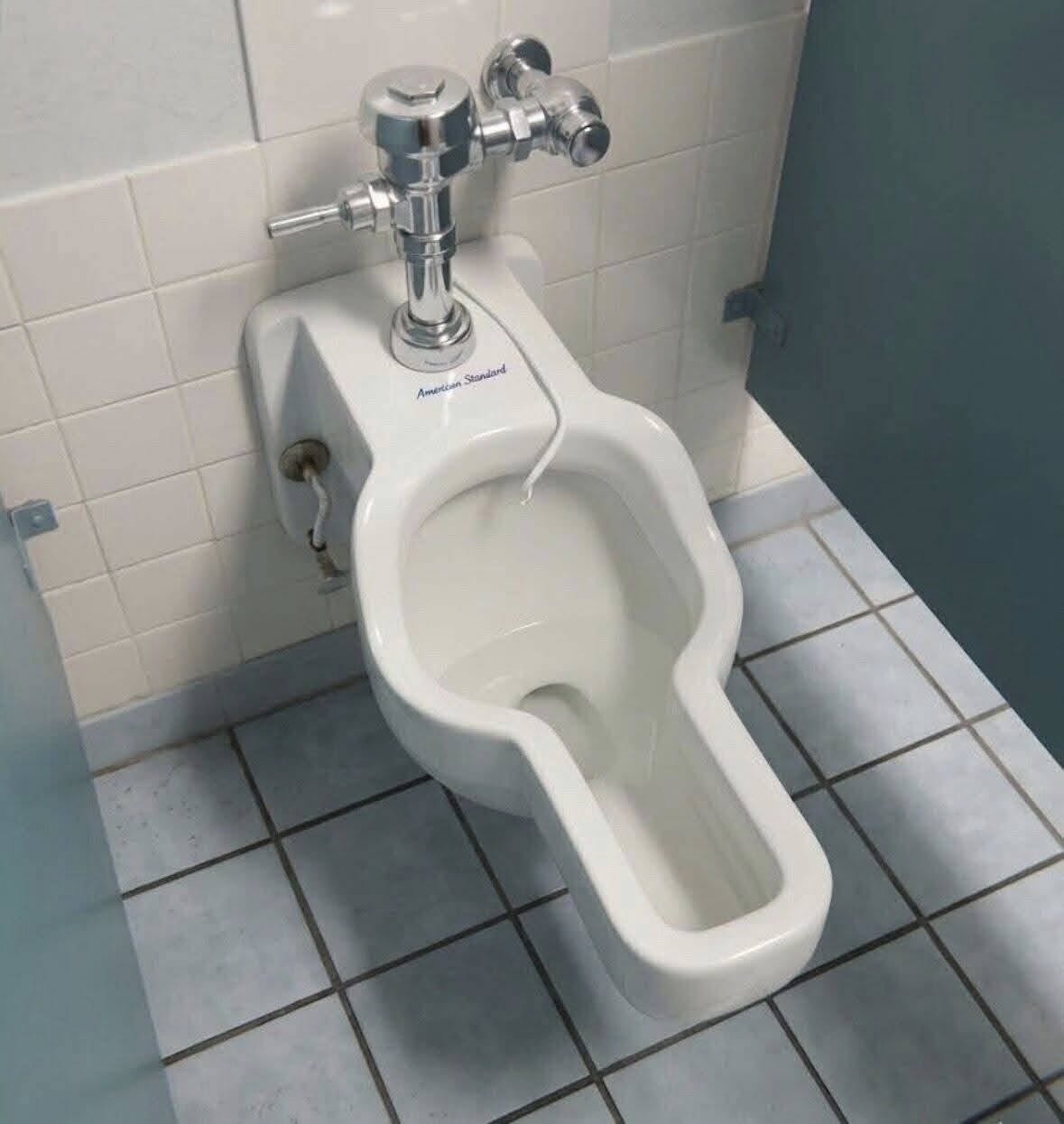
❓ Common Questions & Concerns
Q: Are female urinals sanitary?
A: When properly maintained, they can be more sanitary than seated toilets because they eliminate seat contact. However, cleanliness depends on regular maintenance and user technique.
Q: Will they replace traditional toilets?
A: No. Female urinals are typically offered alongside traditional stalls to provide options. They’re meant to supplement, not replace, existing fixtures.
Q: Are they difficult to use?
A: There’s a learning curve for first-time users, but most people adapt quickly. Clear signage and instructions help significantly.
Q: What if I miss or make a mess?
A: Proper positioning is key. If you’re uncertain, start by observing the fixture design or asking facility staff for guidance. Some models are more forgiving than others.
Q: Are they available in the U.S.?
A: Yes, but adoption is still growing. You’re more likely to find them in:
Modern airports (like some terminals in Atlanta, Seattle, or Denver)
LEED-certified buildings
Sports stadiums and arenas
Progressive tourist attractions (like the Huntsville Space Center)
University campuses
🏛️ Why the Huntsville Space Center?
The U.S. Space & Rocket Center in Huntsville, Alabama, is a cutting-edge educational facility dedicated to innovation, exploration, and the future of human achievement. It makes sense that they’d implement forward-thinking infrastructure like female urinals.
The alignment is clear:
🚀 Innovation: Just as space exploration pushes boundaries, modern restroom design challenges traditional norms.
🌍 Sustainability: Space agencies prioritize resource efficiency—water conservation aligns with that mission.
👥 Visitor experience: With thousands of tourists, school groups, and event attendees, efficient restrooms improve overall satisfaction.
🔬 Education: Exposure to new technologies (even in restrooms) reinforces the center’s mission of inspiring curiosity about science and progress.
In many ways, spotting a female urinal at a space center is fitting: it’s a small but tangible example of how human-centered design and sustainability are shaping the future—even in unexpected places.
🔮 The Future of Public Restrooms
Female urinals are just one piece of a larger transformation in public facility design. Other innovations gaining traction include:
Innovation
Benefit
Touchless everything
Reduces germ transmission
Gender-neutral restrooms
Improves accessibility and inclusivity
Waterless urinals
Eliminates water use entirely
Smart sensors
Monitor usage, cleanliness, and supply levels
Antimicrobial surfaces
Reduce bacterial growth between cleanings
Improved ventilation
Enhances air quality and reduces odors
The goal isn’t just novelty—it’s creating healthier, more efficient, and more equitable public spaces for everyone.
🧭 The Bottom Line
Female urinals like those at the Huntsville Space Center represent more than a quirky design choice. They’re a thoughtful response to real challenges:
✅ Hygiene concerns in high-traffic restrooms
✅ Long wait times that disproportionately affect women
✅ Water conservation goals in an era of climate awareness
✅ Accessibility needs for diverse users
✅ Space efficiency in crowded facilities
Will they become mainstream in the U.S.? That remains to be seen. Cultural attitudes, infrastructure costs, and user acceptance all play a role. But in spaces dedicated to innovation—like a center celebrating human space exploration—it’s fitting to see facilities that look toward the future.
Next time you visit, take a moment to notice the design. Ask questions. And if you’re curious, give it a try. Progress often starts with small steps—even in the restroom.
ADVERTISEMENT

