
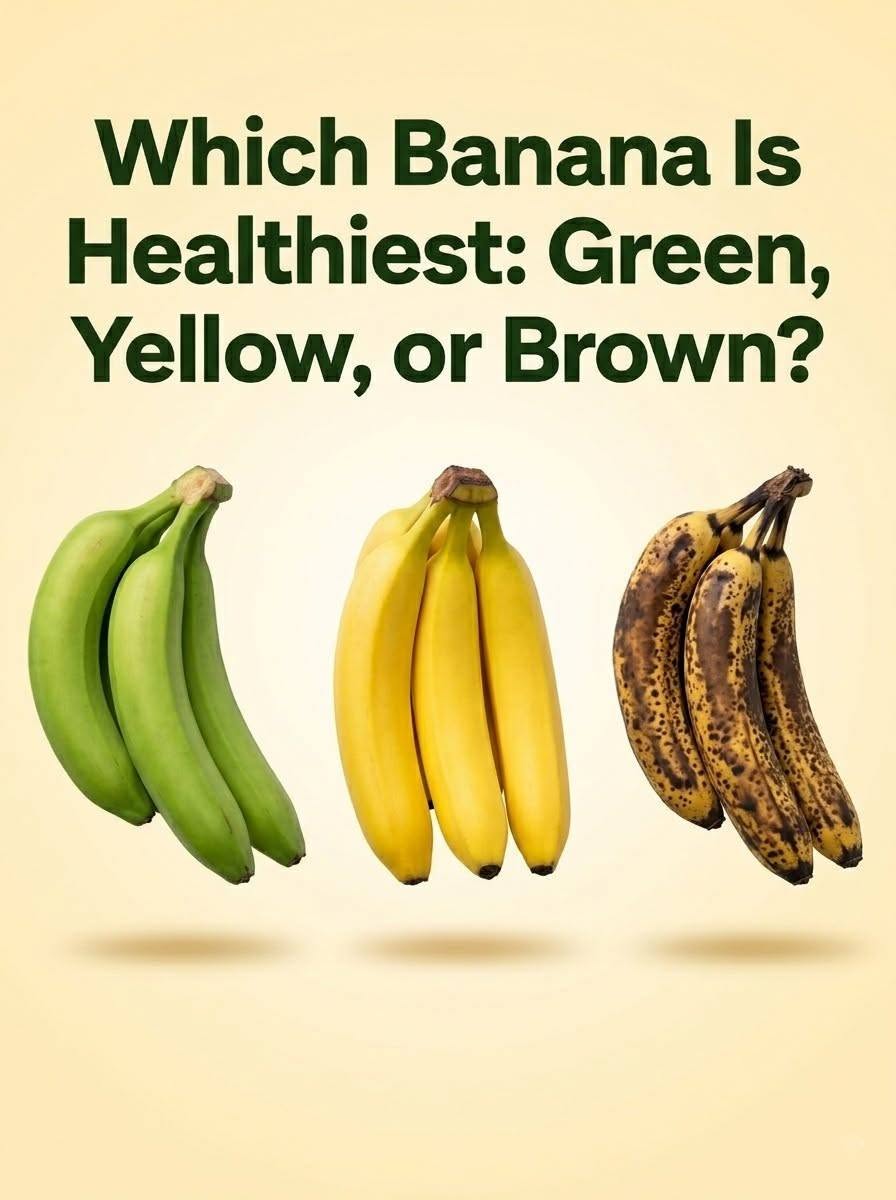
A person focused on blood sugar control may benefit most from green bananas, while an athlete seeking fast fuel might prefer ripe yellow or brown bananas.
The Blood Sugar Perspective
Blood sugar management is one of the most discussed aspects of banana ripeness.
Green bananas contain more resistant starch, which slows digestion and helps prevent rapid blood sugar spikes. Yellow bananas create a moderate response, while brown bananas generally produce the fastest increase in blood glucose because they contain more readily available sugars.
However, experts note that pairing bananas with protein or healthy fats can help reduce blood sugar fluctuations regardless of ripeness. Examples include:
Banana with peanut butter
Banana with Greek yogurt
Banana with nuts
Banana in a protein smoothie
These combinations improve satiety and create a more balanced snack.
The Gut Health Perspective
If gut health is your primary concern, greener bananas likely hold the advantage.
Their resistant starch acts as a prebiotic fiber, feeding beneficial gut bacteria and supporting the production of short-chain fatty acids that contribute to digestive wellness.
As bananas ripen, resistant starch levels fall dramatically. While yellow and brown bananas still provide nutritional benefits, they don’t deliver the same prebiotic effects as greener fruit.
The Weight Loss Perspective
Many people wonder whether one banana stage is better for weight loss.
The answer isn’t straightforward.
Green bananas may promote fullness due to their resistant starch and fiber content. This could potentially reduce overall calorie intake throughout the day.
However, weight loss ultimately depends on total dietary patterns rather than banana color alone.
The best banana for weight management is often the one you’ll consistently enjoy eating as part of a balanced diet.
The Athletic Performance Perspective
Athletes may choose banana ripeness based on timing.
Before exercise:
Yellow bananas provide accessible energy without excessive sweetness.
During endurance events:
Riper bananas offer rapidly available carbohydrates.
After workouts:
Brown bananas help replenish glycogen stores quickly.
Green bananas may be less ideal immediately before intense activity because resistant starch slows digestion.
What Does the Public Prefer?
Online discussions reveal surprisingly strong opinions regarding banana ripeness.
Many consumers prefer yellow bananas with slightly green tips because they offer firmness without bitterness. Others love the sweetness of spotted bananas, while some enthusiasts insist green bananas provide superior texture and satiety. Community discussions consistently show that personal preference plays a major role in determining the “best” banana.
This reinforces an important point: nutritional differences exist, but enjoyment matters too.
So Which Banana Is Actually Healthiest?
After examining the evidence, the answer becomes clear:
There is no universally healthiest banana.
For Complete Cooking STEPS Please Head On Over To Next Page Or Open button (>) and don’t forget to SHARE with your Facebook friends
ADVERTISEMENT

