
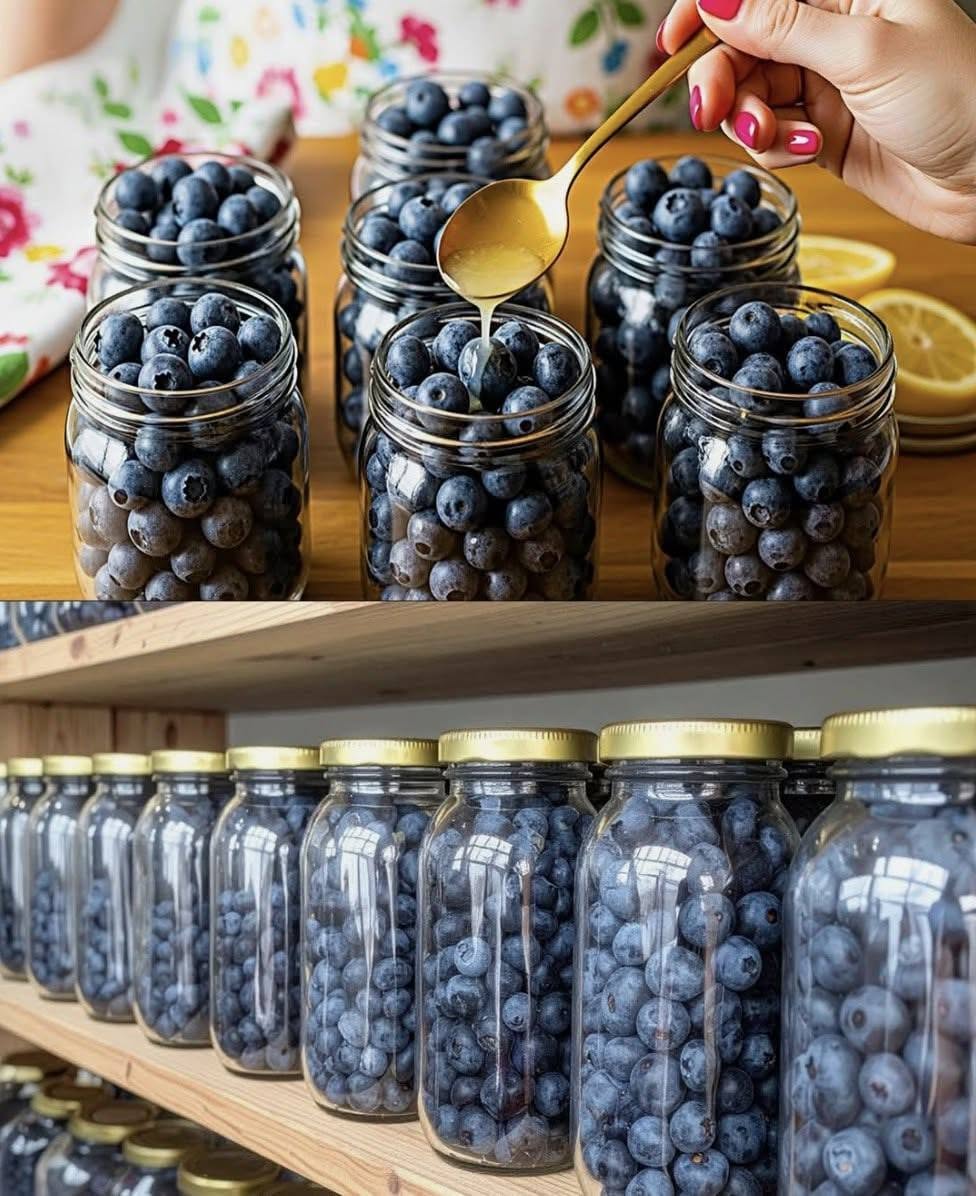
Step 1: Wash the Blueberries Thoroughly
Begin by rinsing the blueberries under cool running water. This helps remove dirt, dust, and surface debris.
Drain thoroughly in a colander and gently pat dry with a clean kitchen towel.
Remove any bruised, damaged, or overly soft berries, as these can affect storage quality.
Step 2: Prepare the Jars
Wash jars, lids, and equipment thoroughly.
Many home preservers sterilize jars by boiling them for approximately 10 minutes or using a dishwasher’s high-temperature cycle.
Allow jars to dry before filling.
Step 3: Fill the Jars
Carefully place the blueberries into the jars.
Leave approximately 2–3 cm (about 1 inch) of space below the rim.
Avoid crushing or packing the berries too tightly.
Before sealing the jars, there is one important step that helps support both flavor and preservation.
Step 4: Add Lemon Juice
Add approximately 1 tablespoon of lemon juice to each 750 ml jar.
The acidity provided by lemon juice helps create a less favorable environment for many microorganisms and contributes to maintaining quality during storage.
Step 5: Add Water
Pour filtered water into each jar until the blueberries are fully covered.
Leave about 1 cm of headspace at the top.
This space allows for expansion during processing.
Step 6: Seal the Jars
Wipe the rims carefully with a clean cloth to remove any residue.
Attach clean lids according to the manufacturer’s instructions.
Proper sealing is essential for successful preservation.
Step 7: Prepare for Heat Processing
Place a folded towel or cloth at the bottom of a large pot.
This helps prevent direct contact between the jars and the pot, reducing the risk of breakage.
Arrange the jars upright in the pot.
Add water around the jars according to recommended canning procedures.
Step 8: Process the Jars
Bring the water to a gentle boil and process according to safe home-canning guidelines for your jar size and altitude.
Processing times may vary depending on local recommendations and equipment used.
Following approved canning guidelines is important for food safety.
The cooling process is just as important as the heating step and helps create a successful seal.
For Complete Cooking STEPS Please Head On Over To Next Page Or Open button (>) and don’t forget to SHARE with your Facebook friends
ADVERTISEMENT

