
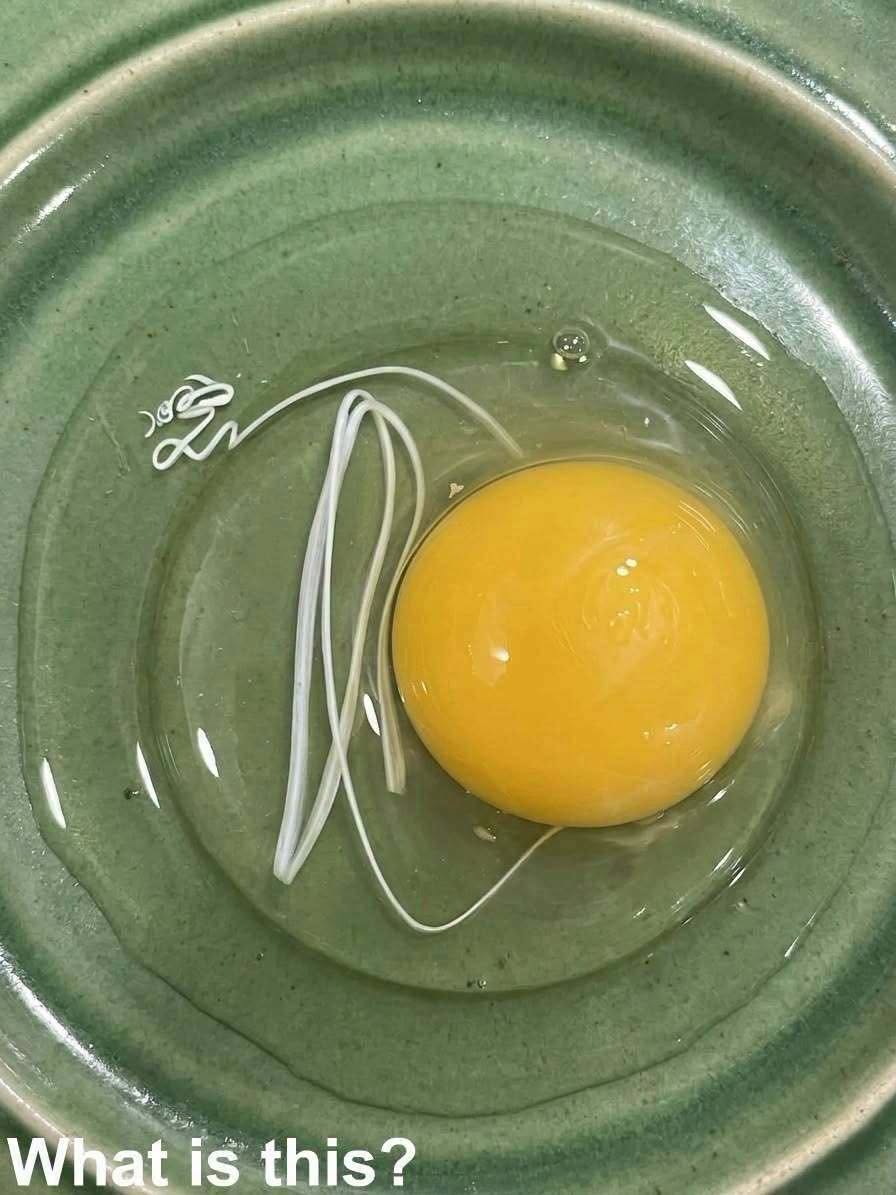
The function: It suspends the yolk in the center of the egg, protecting it from breaking. Without it, the yolk would drift and easily rupture.
The sign of freshness: In fresh eggs, the chalazae are thick and prominent. As eggs age, the chalazae dissolve and become less visible. So if you see a prominent white strand in your egg, congratulations—you’re eating a fresh egg.
Why You Probably Never Noticed It Before
If this was the first time you noticed a chalaza, you’re not alone. Many people never notice them because:
They crack eggs into a hot pan. When you crack an egg directly into a hot frying pan, the egg white cooks quickly and the chalaza can be hidden in the opaque white.
They scramble or bake their eggs. Scrambling or baking eggs mixes everything together, making the chalaza invisible.
They buy older eggs. Older eggs have thinner, less visible chalazae. Commercial eggs might be several weeks old by the time they reach your grocery store.
They don’t look closely. Most people don’t examine their eggs before cooking. They crack, cook, and eat without scrutinizing.
The only reason I noticed mine was because I cracked the egg into a clear glass bowl and looked at it before cooking. And even then, it took me a minute to realize what I was seeing.
Is the Chalaza Safe to Eat?
Yes. Absolutely.
The chalaza is made of protein, just like the egg white. It’s completely safe, completely edible, and contains nothing harmful.
Some people remove the chalaza for aesthetic reasons (if they’re making something that requires a perfectly smooth egg white, like certain desserts or meringues). But you can leave it in without any issues. It won’t change the taste, texture, or nutritional value of your egg.
In fact, if you’re the kind of person who worries about nutrition, the chalaza is pure protein. That’s a good thing.
Other “Strange” Things You Might Find in Eggs
The chalaza is the most common “weird” thing in an egg, but it’s not the only one. Here are some other things you might spot and wonder about.
Blood spots (also called meat spots): These are small red or brown specks that appear in the egg yolk or white. They occur when a small blood vessel bursts during the egg’s formation. They are completely safe to eat. If they bother you, you can remove them with the tip of a knife.
Cloudy egg white: A cloudy egg white is a sign of a very fresh egg. The carbon dioxide hasn’t had time to escape through the shell membrane. As the egg ages, the white becomes clearer.
For Complete Cooking STEPS Please Head On Over To Next Page Or Open button (>) and don’t forget to SHARE with your Facebook friends
ADVERTISEMENT

