
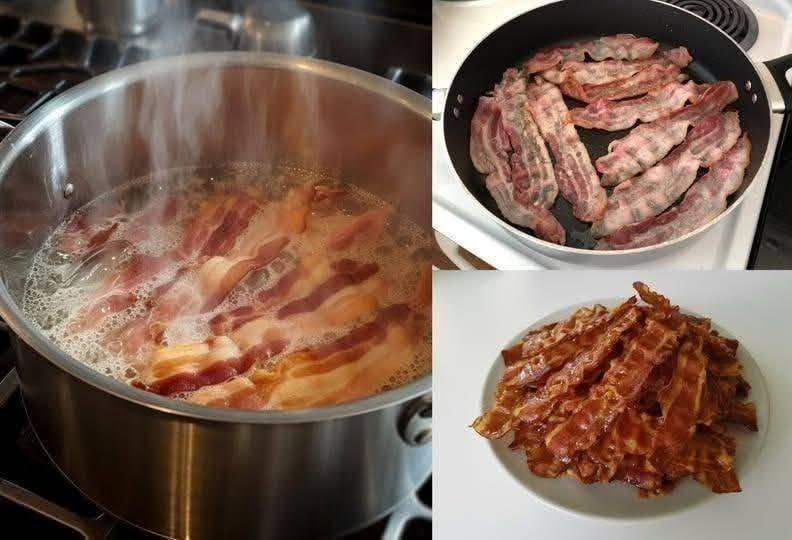
Step 1: Preheat the Oven
Preheat your oven to 400°F (204°C). This temperature allows the bacon to crisp evenly without overcooking or burning.
Tip: If you’re using thick-cut bacon, reduce the temperature slightly to 375°F (190°C) to ensure it cooks evenly before becoming overly crisp.
Step 2: Prepare the Baking Sheet
Line a rimmed baking sheet with aluminum foil or parchment paper. While optional, this step makes cleanup much easier.
For extra-crispy bacon, place a wire rack on top of the lined baking sheet. Arrange the bacon slices on the rack so air can circulate around each piece.
Step 3: Arrange the Bacon
Lay the bacon slices in a single layer without overlapping. Overcrowding the pan can lead to uneven cooking.
Note: If you’re not using a rack, the bacon will still become crispy, though the side resting in the rendered fat may remain slightly softer.
Step 4: Bake
Place the baking sheet on the center rack of the preheated oven and cook until the bacon reaches your desired level of crispness:
Soft bacon: 12–14 minutes
Crispy bacon: 15–18 minutes
Extra-crispy bacon: 18–20 minutes (check frequently after 18 minutes)
Because ovens vary, keep an eye on the bacon toward the end of the cooking time to prevent burning.
Step 5: Drain and Serve
Once cooked, use tongs to transfer the bacon to a paper towel-lined plate to absorb excess grease. Let it rest for 1–2 minutes. This helps it become even crispier.
Easy Cleanup
After removing the bacon, allow the grease to cool and solidify. If you lined the baking sheet with foil or parchment paper, simply fold it up and discard it—no scrubbing required.
You can also save the rendered bacon fat in a container for future cooking. It’s excellent for frying eggs or sautéing vegetables.
Bonus: How to Store and Reheat Bacon
Storing Leftover Bacon
Allow the bacon to cool completely.
Store it in an airtight container or zip-top bag.
Refrigerate for up to 5 days.
Freeze for up to 3 months.
Reheating Tips
Microwave: Wrap in a paper towel and heat for 10–15 seconds.
Skillet: Warm over medium-low heat for 1–2 minutes.
Oven: Bake at 350°F (177°C) for 5–7 minutes.
Flavor Variations and Upgrades
Sweet and Spicy Bacon
Before baking, sprinkle the slices with brown sugar and freshly ground black pepper for a sweet, caramelized kick.
Maple-Glazed Bacon
Brush the bacon with maple syrup halfway through cooking for a sticky, sweet glaze.
Herb-Infused Bacon
Add sprigs of rosemary or thyme to the baking sheet to infuse the bacon with subtle herbal aromas.
Frequently Asked Questions
Can I Cook Bacon Without Foil or Parchment Paper?
Yes. You can place the bacon directly on a baking sheet or rack, though cleanup will take longer.
Do I Need to Flip the Bacon?
No. The oven’s even heat circulation cooks the bacon thoroughly on both sides without flipping.
How Can I Make Bacon Less Greasy?
Using a wire rack allows excess fat to drip away. Draining the bacon on paper towels after cooking also helps remove excess grease.
Can I Cook Frozen Bacon?
Yes, but thawing it first is recommended for more even cooking. If cooking from frozen, separate the slices and add 3–5 minutes to the cooking time.
Why Oven-Baked Bacon Is a Game Changer
Once you’ve tried cooking bacon in the oven, it’s hard to go back to frying it on the stovetop. With its convenience, easy cleanup, and consistently perfect texture, this method outperforms traditional cooking techniques.
From busy weekday mornings to weekend brunches with friends, oven-baked bacon is the foolproof way to achieve perfectly cooked bacon every time.
ADVERTISEMENT

