
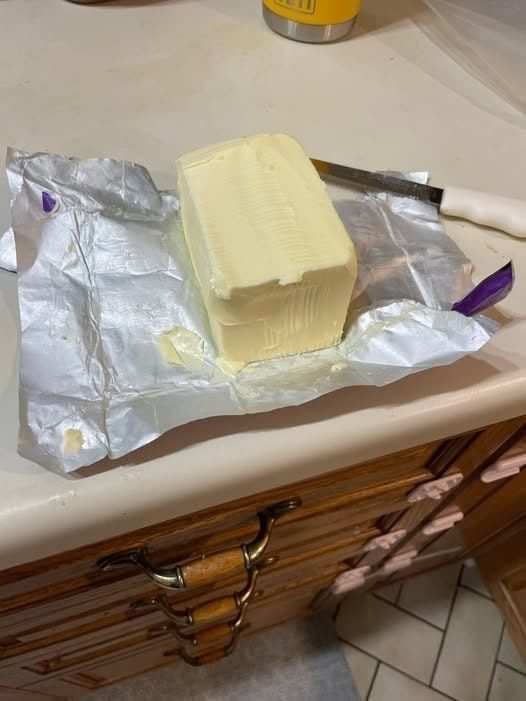
Whipped butter
Not recommended (air + moisture = faster spoilage)
Pro tip: In summer or warm climates, play it safe and keep butter refrigerated. How to Store Butter on the Counter Safely
Want soft, spreadable butter without risking quality or safety? Follow these smart tips:
1. Use a Butter Dish with a Lid
Keeps dust, light, and flies away
Prevents odors from the kitchen (looking at you, onion soup)Kitchen supplies
Choose ceramic or opaque materials to block sunlight (UV speeds rancidity)
2. Try a Butter Bell (or Butter Crock)
This clever French invention uses water as a seal:
Fill the base with cold water
Place butter in the lid (bell-shaped cup)
Submerge the bell into the water—the airtight seal keeps butter fresh
Change water every 2–3 days
Works beautifully for 2–4 weeks if kept cool!
3. Keep It Cool & Dark
Store your butter away from:
Direct sunlight
Stove heat
Dishwashers or ovens
Humid spots (like above the sink)
A drawer or pantry shelf? Perfect.
When to Say Goodbye: Signs Your Butter Has Gone Bad
Even well-stored butter won’t last forever. Watch for these red flags:
Rancid smell – Sharp, sour, or “off” odor (not just creamy anymore)
Sour or bitter taste – Take a tiny lick. If it tastes “wrong,” toss it.
Discoloration – Yellow turning pale, greyish, or spotty
Mold – Fuzzy spots = definite discard (even if only on surface—butter can trap mold roots)
Note: A little darker color around edges? That’s oxidation—not harmful, but a sign it’s aging.
Speed Up Softening Without Risk
Need softened butter fast? Skip the microwave meltdown.
Try these safer methods:
ADVERTISEMENT

