
👩🍳 Step-by-Step Instructions
Step 1: Mix Quark and Eggs
In a large mixing bowl, combine 200 g of quark or Greek yogurt with 3 eggs. This mixture forms the base of your protein bread, providing moisture and binding the ingredients together.
✅ Pro tip: Use a whisk or electric mixer on low speed to ensure a smooth, lump-free consistency. The quark or yogurt adds a subtle tang while keeping the bread soft and light.
Step 2: Add Salt and Baking Soda
To the egg and yogurt mixture, add 1 tsp of salt and 2 tsp of baking soda.
✅ Why it works: Baking soda reacts with the acidity of the yogurt to create lift, giving the bread a fluffy yet dense texture. Salt enhances all the flavors—don’t skip it!
⚠️ Note: If using apple cider vinegar (optional), add it now to boost the rising reaction.
Step 3: Incorporate Dry Ingredients
Add to the wet mixture:
100 g ground almonds
100 g mixed seeds
80–120 g mixed nuts (chopped if large)
30 g ground linseed (flaxseed)
Stir well until evenly distributed. These ingredients provide:
Texture and crunch from nuts and seeds
Healthy fats for sustained energy
Fiber and omega-3s for heart and gut health
Step 4: Add Psyllium Husks (The Secret Ingredient)
Gradually sprinkle in 16 g (2 tbsp) of psyllium husks while stirring continuously.
✅ Why psyllium matters: It absorbs moisture and creates a gel-like binding effect—essential for achieving a bread-like texture without gluten. It also adds significant soluble fiber, which supports digestion and satiety.
🔄 Stir thoroughly until the mixture thickens noticeably (about 1–2 minutes). It should hold together when pressed.
Step 5: Shape the Dough
Once thickened, shape the dough:
By hand: Form into a free-form loaf on parchment paper (rustic style)
In a pan: Press into a parchment-lined 9×5-inch loaf pan for uniform slices
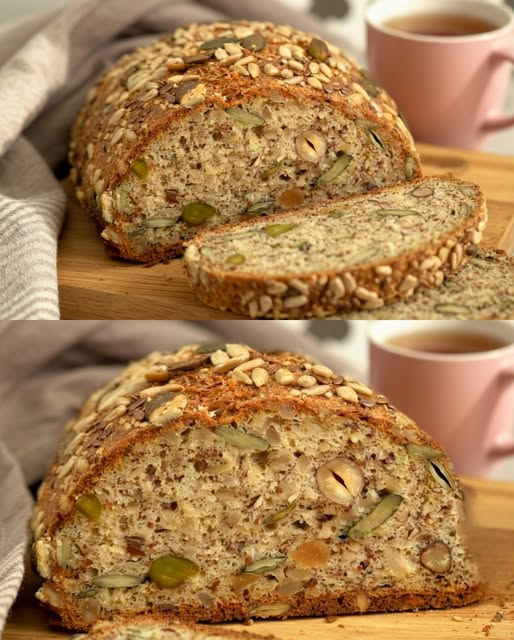
✅ Pro tip: Wet your hands slightly to prevent sticking. For extra crunch and visual appeal, press additional seeds onto the top before baking.
Step 6: Prepare for Baking
Line a baking sheet or loaf pan with parchment paper (not wax paper—it can stick).
Transfer the shaped dough to the prepared pan.
Smooth the top gently with a wet spatula if desired.
Step 7: Let It Rest (Don’t Skip!)
Allow the dough to rest for 20 minutes at room temperature.
✅ Why this matters: Psyllium needs time to fully hydrate. This step ensures the bread sets properly and achieves the ideal texture—moist inside, crispy outside.
🔥 While resting, preheat your oven to **180°C **(350°F).
Step 8: Bake to Golden Perfection
Place in the preheated oven.
Bake for 60 minutes with top and bottom heat (no fan/convection for best rise).
The bread is done when:
The top is deep golden brown
It sounds hollow when tapped on the bottom
A toothpick inserted in the center comes out clean
✅ Pro tip: If the top browns too quickly, tent loosely with foil after 40 minutes.
Step 9: Cool Completely (Patience Pays Off!)
Remove from the oven and let the bread cool completely on a wire rack—at least 1–2 hours—before slicing.
✅ Why cooling matters: Cutting while warm causes crumbling. As it cools, the structure sets, yielding clean, sturdy slices.
✅ Storage tip: Once cooled, wrap tightly in parchment + foil, or store in an airtight container.
For Complete Cooking STEPS Please Head On Over To Next Page Or Open button (>) and don’t forget to SHARE with your Facebook friends
ADVERTISEMENT

