
1. Vintage Tally Weights or Calibration Weights
These were used in old balancing scales and can look similar to a plain metal bar.
2. Decorative or Souvenir Bar
Sometimes metal bars are ornamental or commemorative rather than functional.
3. Industrial or Hardware Component
If it was near a maintenance area, it could be a weight, spacer, or part from a larger piece of equipment.
In these cases, markings, stamps, or differences in shape usually provide clues.
How to Confirm What You Found
If you want to be absolutely sure what the object is, here are a few easy steps:
1. Inspect Closely
Look for stamps, engravings, numbers, or symbols that might indicate weight, metal type, or manufacturer.
2. Test in Water
Washing or rinsing the bar under running water while rubbing your hands over it can give you a sense if it helps with lingering food odors.
3. Ask an Expert
If you’re still unsure, a local antique dealer, metalworker, or hardware shop might recognize the bar’s use or origin.
Tips for Using a Metal Odor Bar
If you choose to use it for reducing kitchen odors, keep these suggestions in mind:
Use it after cutting onions, garlic, fish, or other strong-smelling foods.
Rub it between your hands under cold running water.
Clean it occasionally with gentle soap to remove any buildup.
Store it near the sink or cutting board for easy access.
This can be a simple, low-cost way to reduce stubborn odors without strong soaps or scrubbing.
Conclusion :
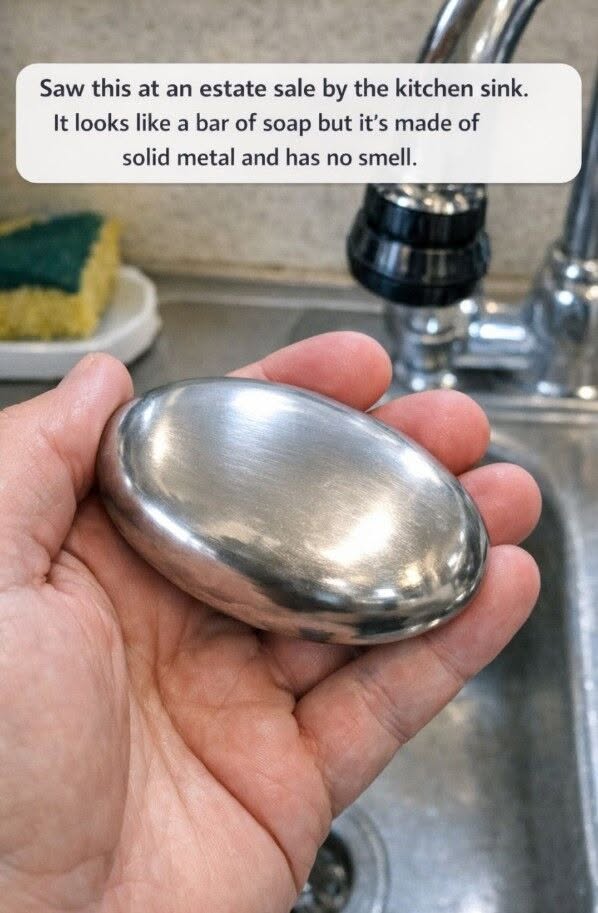
Finding a small, solid metal bar near a kitchen sink during a remodel or estate sale can feel mysterious at first — especially if it looks like nothing you recognize. Most often, however, these bars were placed there with a purpose: to help reduce strong food odors from hands without harsh detergents or fragrances. Their sealed, scentless nature doesn’t make them surprising in that role — it simply reflects how they work.
While they’re less common in modern kitchens, they provide an interesting glimpse into how everyday tasks were handled in the past, and how kitchen tools evolved over time. Whether you decide to use it for odor removal or simply keep it as an intriguing find from a renovation, knowing what it likely is — and how it works — makes it easier to appreciate the little surprises found in old homes.
If you ever encounter other unusual objects during renovations, feel free to ask about them — sometimes the story behind an item is as interesting as the item itself.
ADVERTISEMENT

