
DAY 2
- 6 AM – Shape and second rise:Turn the dough out onto a lightly floured work surface and gently press it into a rectangle with the short end closest to you. Fold the left and right sides of the dough into the middle. Starting from the end farthest from you, roll the dough towards yourself into a log shape. Use your hands to gently cup the dough and pull it towards yourself to create tension on the outside. Pinch the ends to seal any edges. Transfer the dough, seam-side down, into a lightly greased bread pan. For easier removal, you can also line the pan with parchment paper. Allow the dough to rest at room temperature, uncovered until the dough has risen 1 inch above the rim of the pan, about 2-3 hours depending on the temperature of your kitchen.
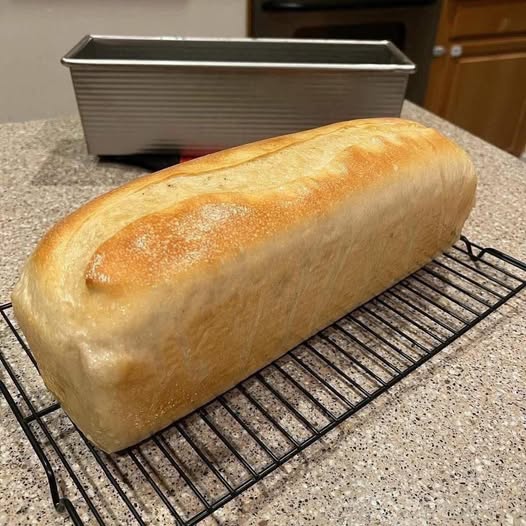
- 9 AM – Bake: Preheat the oven to 450°F (232°C). Transfer the pan to the oven and turn the oven down to 375°F (190°C). Bake for 45-50 minutes. Allow the bread to cool in the pan for 10-15 minutes before transferring the loaf to a cooling rack.
NOTES
Consider your kitchen’s temperature and humidity, especially in warm climates, as these factors can affect the final product.
Cooler kitchens (below 68°F / 20°C): The first and second rises will take longer than outlined in the sample timeline. If the dough takes too long to rise, you can adjust the recipe by using 100 g of active starter and 255 g of water. The extra starter will help the dough ferment faster.
Warmer kitchens (above 72°F / 22°C): The first and second rises will be shorter than outlined in the sample timeline. If the dough rises too quickly overnight, mix the dough in the morning and monitor it closely to avoid over-proofing.
If you wake up to a dough that’s over-proofed and too sticky to work with, don’t discard it. Use it to make sourdough focaccia bread.
Storage tips:Keep the bread in a bread bag, beeswax wrap, or kitchen towel at room temperature. It will stay fresh for a few days. To freeze, wrap individual loaves or slices in plastic wrap and place them in a freezer-safe container. Ensure they are fully cooled before wrapping to avoid condensation.
ADVERTISEMENT

