
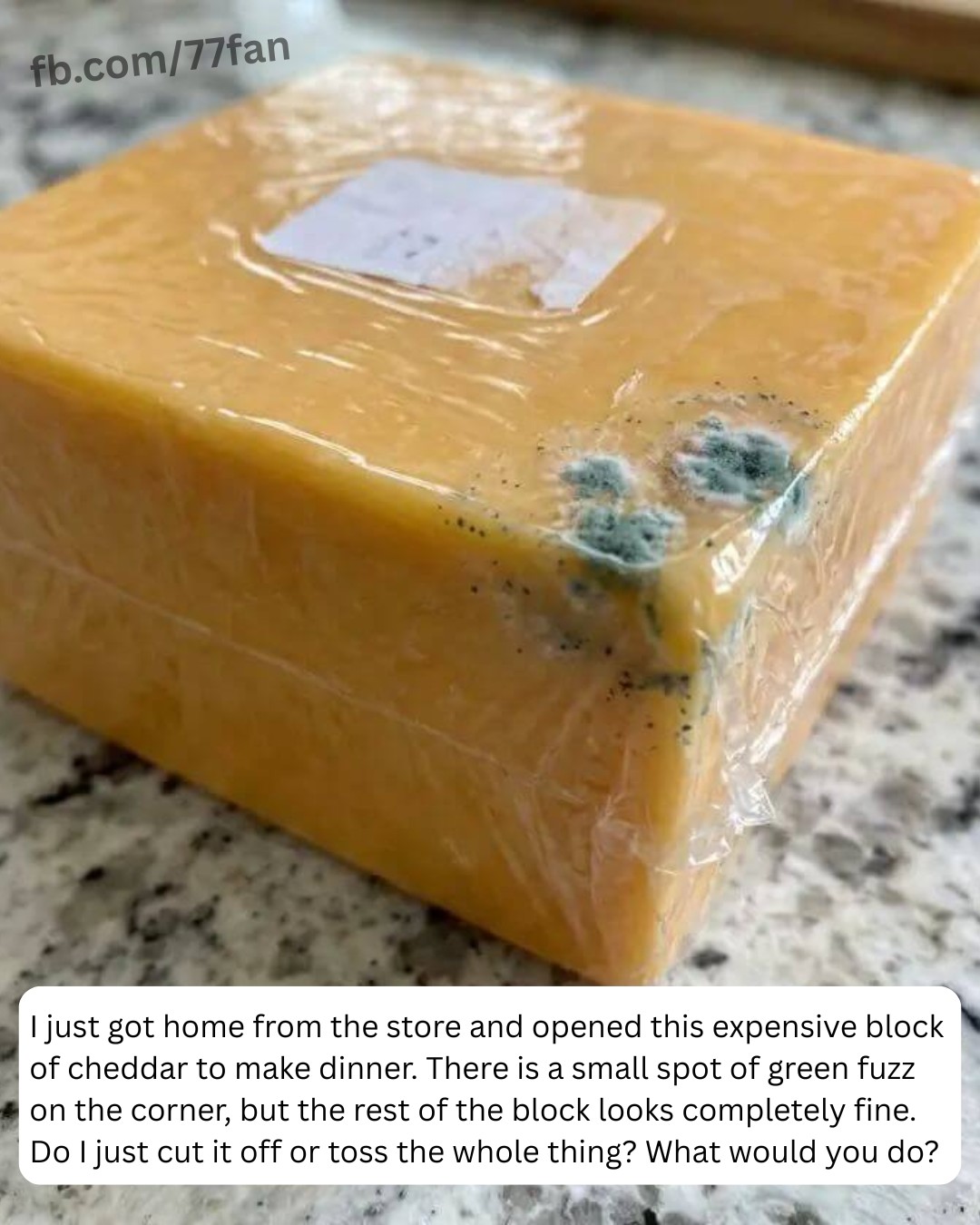
But cheddar gives you a little wiggle room.
Take a Closer Look (And Yes, Smell It)
Before you grab a knife, pause for a quick inspection. It takes 20 seconds and can save you from making the wrong call.
Look for:
Multiple mold spots (not great)
Odd colors like black, pink, or orange (worse)
Any spreading beyond the obvious patch
Smell it:
Sharp cheddar smell? Fine
Sour, ammonia-like smell? That’s your sign to stop
Touch it:
Still firm? Good
Slimy or weirdly soft? Not good
If everything else looks normal, you’re probably in safe territory to trim it.
How to Cut It Off Without Making It Worse
This is the part people mess up—cutting too close.
Here’s the right way:
Use a clean, sharp knife
Cut at least 1 inch (2.5 cm) around and below the mold
Don’t slice straight through the mold and keep going—that drags spores into the good part
Cut wide, then discard the moldy portion immediately
It might feel like you’re sacrificing a bit more cheese than necessary. You are. That’s the point.
Better safe than sorry.
When It’s Not Worth Saving (Even If It Hurts a Little)
There are moments where trimming just isn’t the move.
Toss the whole block if:
Mold is in multiple places
It looks like it’s spread deeper than the surface
The texture feels off (soft, wet, sticky)
The smell makes you hesitate—even slightly
And here’s the honest part: if you’re unsure… you’re already uncomfortable. That alone is enough reason to let it go.
Food should feel safe, not questionable.
What the Experts Actually Say
According to the USDA, hard cheeses like cheddar can be saved by cutting away mold with a 1-inch margin.
Soft cheeses? Toss them completely.
It’s a simple rule, and honestly—it holds up in real life.
Can You Still Cook With It After Trimming?
Short answer: yes.
Once you’ve removed the mold properly, cheddar can still be used—especially in cooked dishes.
For Complete Cooking STEPS Please Head On Over To Next Page Or Open button (>) and don’t forget to SHARE with your Facebook friends
ADVERTISEMENT

