
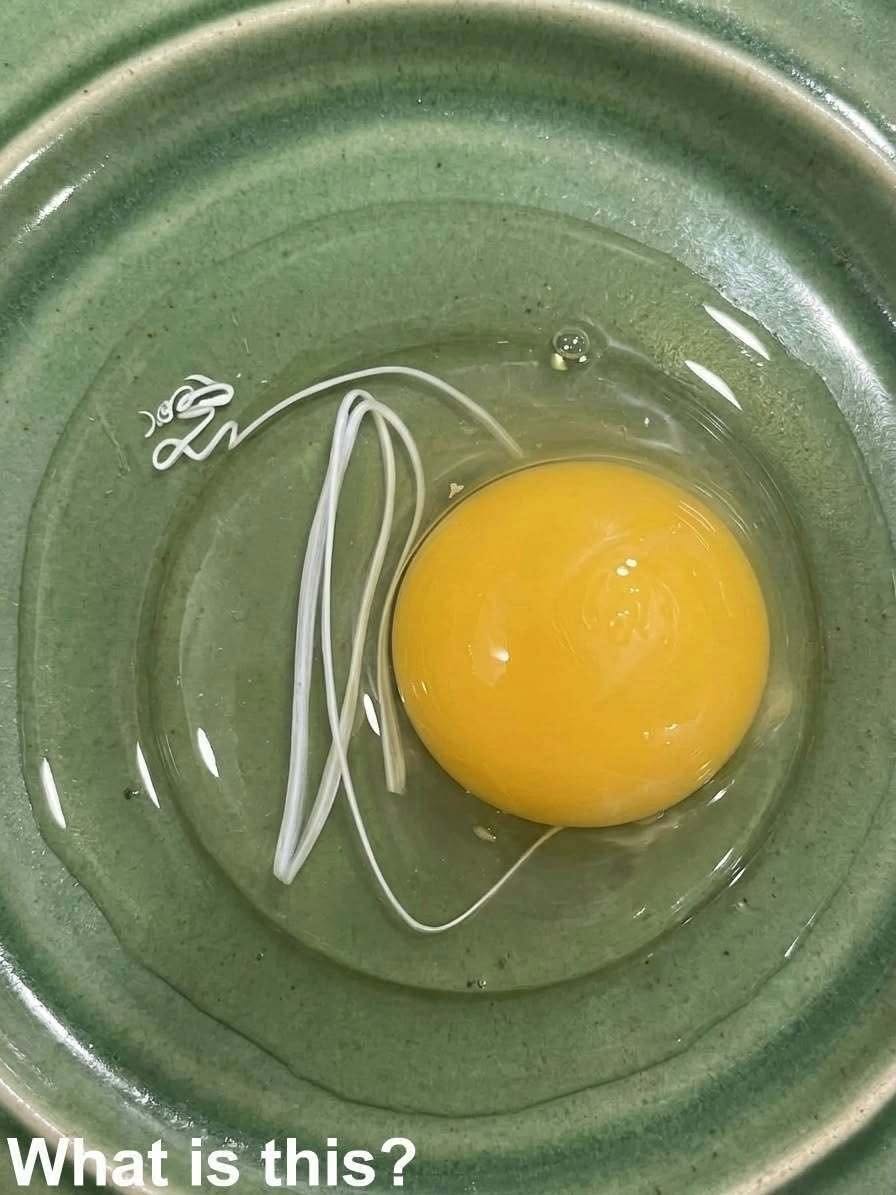
The chalaza is a natural, structural part of an egg. These small, twisted, rope-like strands of protein act as tiny support cables. Their biological job is to anchor the yolk in the center of the egg, preventing it from bumping against the shell and moving around excessively.
In other words, the strange white string that initially alarmed me was actually performing a vital function. Nature had designed it that way all along.
Is It Safe to Eat?
Absolutely. The chalaza is entirely edible and poses zero health risks.
Most people consume it regularly without even noticing it is there, as it blends seamlessly into the egg white during cooking. Whether you are making scrambled eggs, frying them up, baking a quiche, or whipping up a batch of cookies, the chalaza is perfectly safe to leave in place. Some chefs choose to strain it out for purely cosmetic or textural reasons in delicate dishes like custards, but there is absolutely no food safety requirement to remove it.
An Unexpected Sign of Freshness
Perhaps the most surprising thing I learned was that a visible, prominent chalaza is actually a sign of a fresher egg.
As an egg ages, the chalaza gradually weakens, breaks down, and becomes less noticeable. This means that the thick, distinct strands I had mistaken for a warning sign were actually evidence that my egg was exceptionally fresh. The feature I had feared was, in fact, a mark of high quality. That realization completely changed my perspective.
Why Do So Many People Mistake It for Something Dangerous?
The answer is simple: unfamiliarity.
Many consumers do not know the chalaza exists until they suddenly notice one. Because the strands can resemble tiny cords, threads, or even worms, it is incredibly easy to mistake them for something harmful. This reaction is entirely understandable. Human beings are naturally cautious when it comes to food; when we encounter something unexpected, our brains are wired to assume danger before seeking an explanation.
Other Harmless Egg Oddities
The chalaza isn’t the only harmless feature that sometimes surprises people at breakfast. You might also notice:
Small Blood Spots: Tiny red or brown spots occasionally appear inside eggs. They are simply a ruptured blood vessel from the hen and are completely harmless.
Cloudy Egg Whites: Very fresh eggs often have cloudier, opaque whites due to naturally occurring carbon dioxide that hasn’t yet dissipated.
Varying Yolk Colors: Egg yolks can range from pale yellow to deep, vibrant orange depending entirely on the hen’s diet.
All of these variations are normal and are not signs of spoilage.
How to Tell if an Egg Has Actually Gone Bad
If you are genuinely concerned about egg freshness, ignore the chalaza and watch for these actual warning signs:
A strong sulfur or rotten odor (the most reliable indicator)
Unusual discoloration in the yolk or white
A slimy or powdery texture on the shell or inside the egg
Cracked shells that show signs of contamination
Unusual mold growth
If an egg smells normal and appears fresh, the presence of a chalaza is never a cause for concern.
Frequently Asked Questions
What is the white string inside an egg?
It is called the chalaza, a natural protein structure that acts as an anchor to keep the yolk centered.
Is the chalaza safe to eat?
Yes. It is completely edible, safe for consumption, and made of the same protein as the rest of the egg white.
Does a visible chalaza mean the egg is bad?
Quite the opposite. A prominent chalaza usually indicates that the egg is very fresh.
Should I remove the chalaza before cooking?
Removing it is entirely optional. Most home cooks leave it in place because it is harmless and cooks just like the rest of the egg.
Can the chalaza be mistaken for a parasite?
For Complete Cooking STEPS Please Head On Over To Next Page Or Open button (>) and don’t forget to SHARE with your Facebook friends
ADVERTISEMENT

