
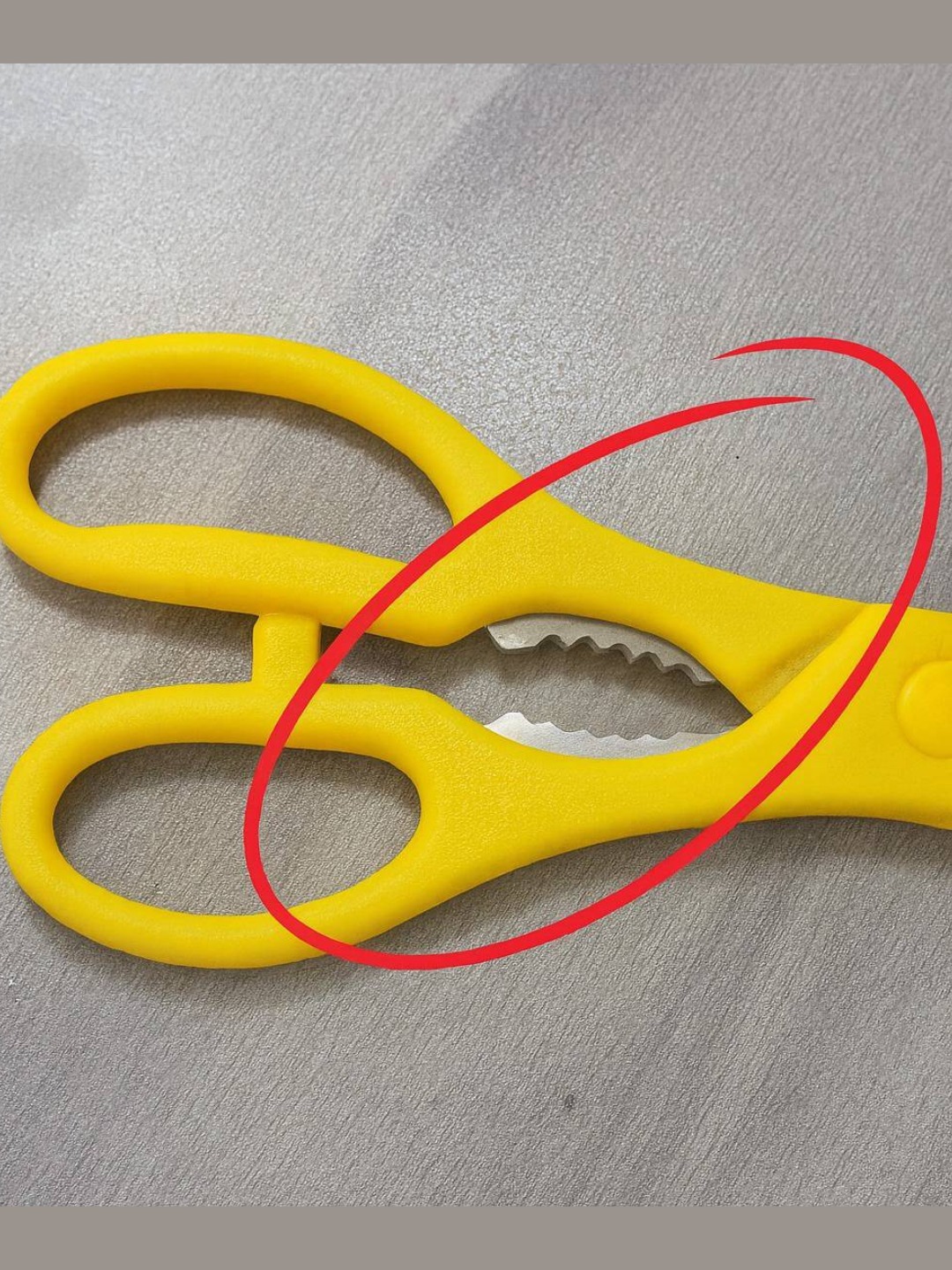
Use heavy-duty poultry shears.
Grip a chicken wing or drumette end in the notch.
Apply firm, steady pressure to snap the bone for easier cooking or portioning.
→ Essential for spatchcocking or making stock!
4. Crack Seafood Shells 🦀
Crab legs, lobster claws, or shrimp shells? The gripper holds slippery shells steady while you cut—or cracks them open with gentle pressure.
5. Open Tough Packaging 🧃
Plastic milk caps, juice bottles, or stubborn vacuum seals? The ridges grab and twist without slipping—no more torn fingernails!
⚠️ Safety & Care Tips
Don’t overforce: Avoid extremely hard items (like lobster claws or large bones) unless your scissors are rated for it.
Keep fingers clear: The metal teeth can pinch during use.
Clean thoroughly: Rinse the hinge area after use—food debris (especially from raw meat) can hide in the grooves.
Kitchen only: Don’t use it for non-food tasks (e.g., opening paint cans)—it can damage the scissors.
🛠️ Do All Scissors Have This?
No! Look for it on:
Poultry shears (often spring-loaded with bone notch)
Heavy-duty kitchen shears (like OXO, KitchenAid, or Messermeister)
Multi-purpose utility scissors
If your scissors close fully with smooth handles, they likely don’t have this feature—and that’s okay! But if you see interlocking ridges, you’ve got a hidden tool.
💡 Why Manufacturers Include It
In small kitchens, space is precious. This design eliminates the need for:
A separate jar opener
A nutcracker
Poultry prep tools
One tool = three functions = less clutter, more efficiency.
❤️ Final Thought
Great design isn’t always flashy.
Sometimes, it’s a small, toothy notch that solves everyday frustrations without fanfare.
So next time you reach for your kitchen scissors, give that “useless” ridge a try.
You might just wonder how you ever lived without it.
ADVERTISEMENT

