
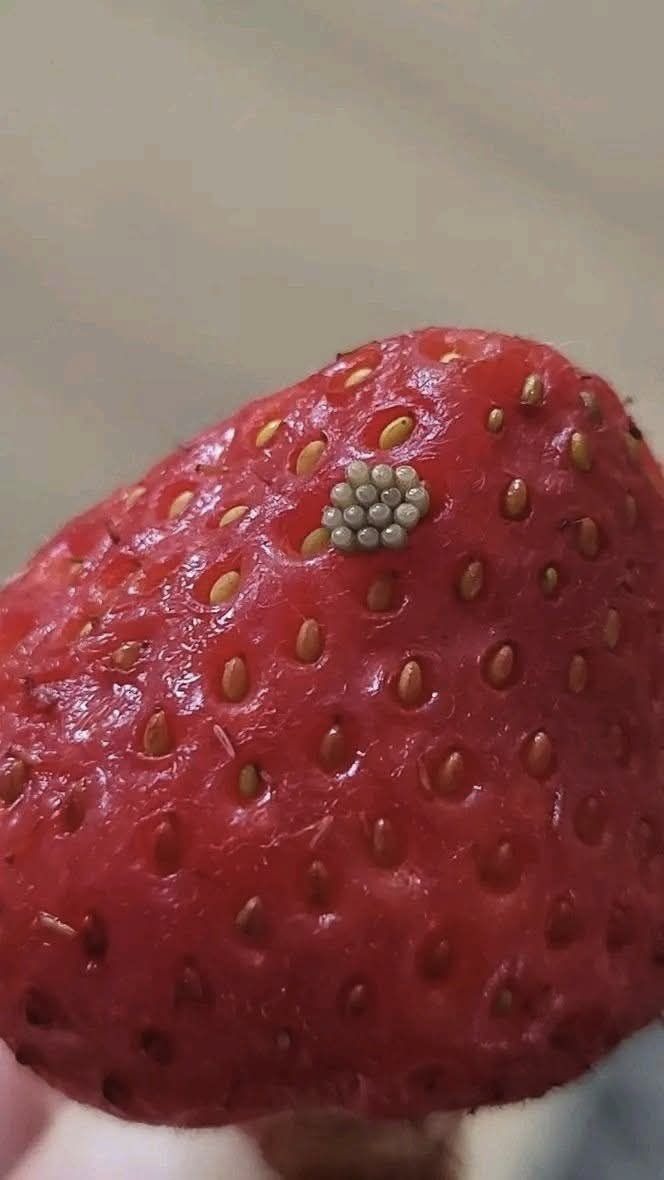
🧐 Is This Normal?
Yes. Unfortunately, it is quite normal, especially during warm, humid seasons when fruit fly populations are high.
Even organic farms and high-end grocery stores struggle with SWD. Because these pests attack the fruit before harvest, washing the outside of the berry won’t remove them. They are inside. This doesn’t mean the farmer did a bad job; it means nature is doing what nature does.
⚠️ Are They Safe to Eat?
Here is the honest, science-based answer: Yes, accidentally eating these larvae is generally not harmful to humans.
While the idea is psychologically repulsive, these larvae are not known to carry human diseases or parasites. They are simply protein. If you were to eat a strawberry without noticing a larva, your stomach acid would digest it just like any other food. You would not get sick, and you would not get “infested.”
However, most people prefer not to eat them (understandably!). Beyond the “ick” factor, heavy infestations can affect the texture and taste of the berry, making it mushy or slightly fermented.
✅ How to Tell If Your Fruit Is Still Good
Just because there are larvae doesn’t mean the whole batch is ruined. Here is how to assess your strawberries:
Inspect the Berry: If the strawberry is firm, bright red, and smells sweet, it is likely fine aside from the larvae.
Check for Rot: If the berry is mushy, leaking juice, has gray mold, or smells sour/fermented, toss it. This indicates the larvae (or other bacteria) have caused significant decay.
The “Squish” Test: Gently squeeze the berry. If it holds its shape, it’s good. If it collapses, it’s past its prime.
🛁 The Salt Water Soak Method: How to Clean Your Berries
If you want to ensure your berries are larva-free before eating or baking with them, the salt water soak is the most effective home method.
What You’ll Need:
Fresh strawberries (or raspberries/blackberries)
Cold water
Salt (table salt or sea salt)
A large bowl
A colander
Step-by-Step Instructions:
1. Prepare the Solution
Fill a large bowl with cold water. Add about 1 teaspoon of salt per cup of water. Stir until dissolved. You don’t need a saturated brine; a mild saline solution is enough to irritate the larvae.
2. Submerge the Berries
Gently place your strawberries in the water. Do not overcrowd the bowl. Let them soak for 10–15 minutes.
3. Watch (If You Dare)
During this time, you may see tiny white specks floating to the surface or sinking to the bottom. These are the larvae exiting the fruit.
4. Rinse Thoroughly
Remove the berries from the salt water and place them in a colander. Rinse them thoroughly under cool, running fresh water to remove any residual salt and any remaining debris.
5. Dry Completely
This is crucial for storage. Lay the berries out on a paper towel-lined tray and pat them dry. Moisture leads to mold, so ensure they are completely dry before putting them back in the fridge.
For Complete Cooking STEPS Please Head On Over To Next Page Or Open button (>) and don’t forget to SHARE with your Facebook friends
ADVERTISEMENT

