
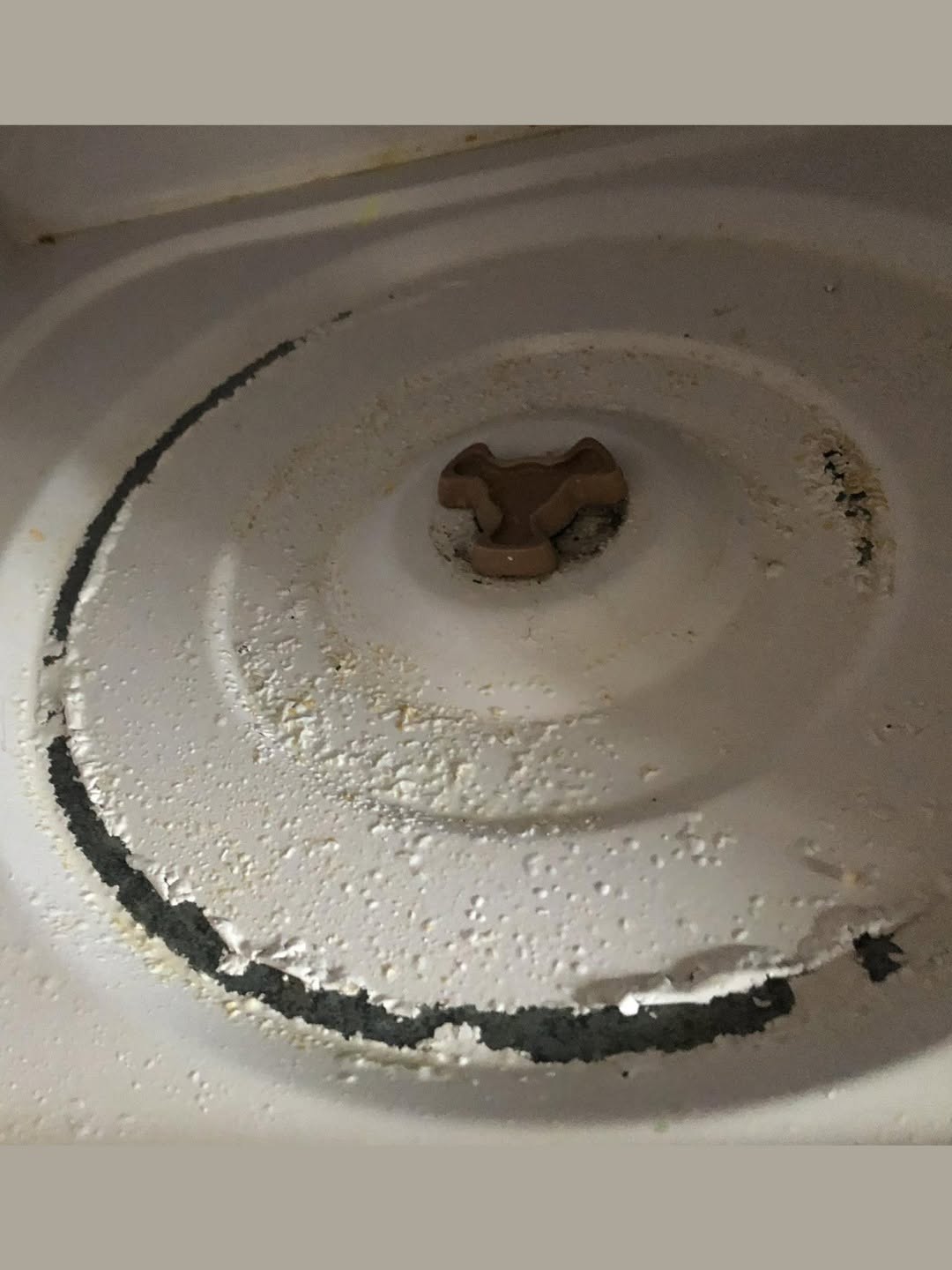
That steel wool you used to scrub off last week’s tomato sauce explosion?
Yeah… that wasn’t just cleaning.
That was slowly stripping away the protective layer inside your microwave.
Even abrasive cleaners like oven spray or bleach-based formulas can degrade the interior over time.
✅ Fix: Use gentle tools like soft sponges and natural cleaners (vinegar + water, lemon juice) to avoid wear and tear.
3. Acidic Food Left to Sit
Tomato sauce.
Vinegar-based marinades.
Citrus juices.
Wine reductions.
These acidic foods left in the microwave after heating begin to eat into the enamel — especially if they drip onto the floor or sides.
Eventually, those spots weaken — and peel.
✅ Pro Tip: Wipe spills immediately while still warm — it takes seconds and saves hours of scraping later.
⚠️ And There’s One More Sneaky Saboteur: The Turntable Wheel
Yes, even your microwave has a hidden troublemaker.
Underneath the glass turntable sits a plastic or rubber roller wheel. If food gets trapped underneath and isn’t cleaned regularly, the turntable grinds against the bottom — scratching and wearing away the enamel .
Over time?
That spot becomes thin, worn, and eventually peels — sometimes unnoticed until it’s too late.
✅ Fix: Remove the turntable weekly and wipe under the wheel. Just don’t forget to put it back — unless you want your mug of soup spinning all day long.
⚡ Is a Peeling Microwave Dangerous?
The short answer?
Sometimes.
Here’s the longer version:
Exposing metal beneath
Can cause arcing (sparks) during use
Arcing sparks
May damage internal components or start a fire
Rust forming on exposed metal
Could flake into food or reduce lifespan of appliance
Uneven cooking
Damaged surfaces reflect microwaves poorly
So while your microwave won’t explode (unless things really go wrong), a damaged interior can:
Shorten your microwave’s life
Ruin future meals with bits of rust or flakes
Become a safety issue if arcing begins
Not exactly appetizing.
🧼 How to Clean Your Microwave the Right Way – Without Ruining the Interior
Avoid aggressive methods. Here’s what to do instead:
Step 1: Steam It Out
Place a microwave-safe bowl with:
½ cup water
½ cup white vinegar
Or 1 lemon, sliced and submerged
Microwave for 3–5 minutes until boiling and steam fills the cavity.
Let sit for 5 minutes — then wipe gently with a damp cloth.
✅ Why it works: Steam loosens grime without scrubbing.
Step 2: Avoid Steel Wool and Abrasive Pads
Use only soft cloths, microfiber wipes, or silicone scrubbers.
Hard materials are like sandpaper to your microwave’s delicate surface.
Step 3: Clean Daily (Or At Least Weekly)
A quick wipe-down after each spill keeps acids from settling in and eating away at the finish.
For Complete Cooking STEPS Please Head On Over To Next Page Or Open button (>) and don’t forget to SHARE with your Facebook friends
ADVERTISEMENT

