
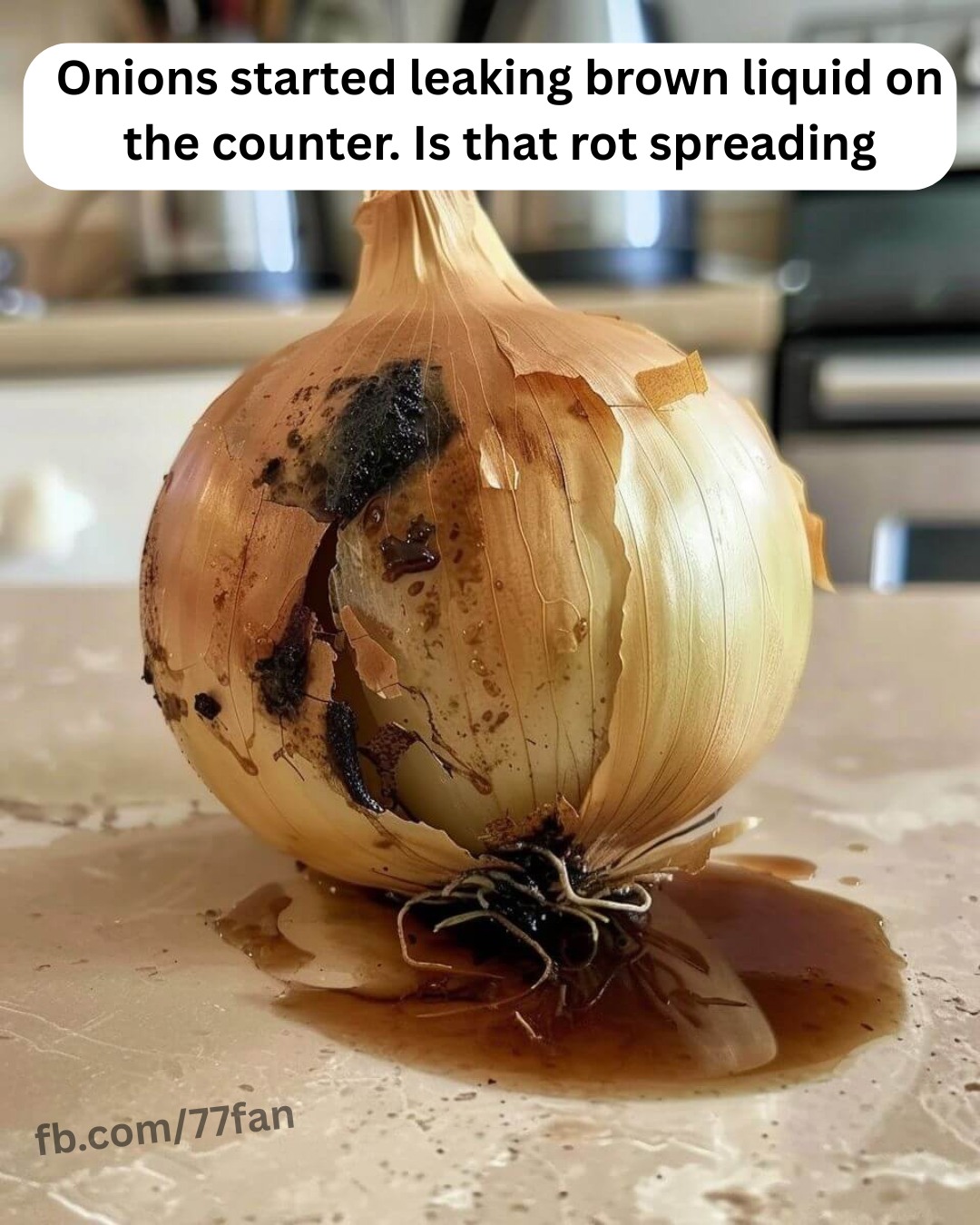
First:
Wipe away the liquid using paper towels.
Wash the area thoroughly with warm soapy water.
Rinse and dry completely.
Then disinfect the surface using either:
a kitchen-safe disinfectant spray
or a diluted bleach solution
A common homemade mix is:
1 tablespoon bleach
1 gallon water
Let it sit for several minutes before wiping dry.
And yes, it’s worth cleaning carefully. Onion residue can smell surprisingly strong for days if ignored.
The Storage Mistakes That Cause Onion Problems
Most onion spoilage comes back to moisture and airflow.
Onions like cool, dry, ventilated conditions. Think farmhouse pantry — not sealed container buried beside the stove.
Ideal onion storage includes:
mesh bags
baskets
cool cupboards
dry basements
open-air bins
Avoid refrigeration for whole onions unless they’ve already been cut. Refrigerators often introduce too much moisture, which encourages decay.
Sweet onions spoil faster than yellow storage onions because they naturally contain more water. That’s why Vidalias sometimes seem to go bad overnight.
Different onion types really do behave differently.
Smart Shopping Habits Make a Huge Difference
A lot of spoilage starts at the grocery store before you even bring the onions home.
When buying onions, look for ones that are:
firm
dry
heavy
free from bruises
free from soft spots
not sprouting
Avoid onions with damp outer skins or strong odors. Those are early warning signs.
And maybe don’t buy a gigantic bulk bag unless you genuinely use onions constantly. It sounds economical until three of them liquefy in the pantry.
We’ve all been there.
Should You Worry About Food Poisoning?
Most spoiled onions won’t cause severe illness, but they absolutely can upset your stomach.
Rotting vegetables may contain harmful bacteria capable of causing:
nausea
vomiting
stomach cramps
diarrhea
The risk increases if the onion is visibly decomposing or smells fermented.
People with weakened immune systems, older adults, and young children should be especially cautious with questionable produce.
A fresh onion isn’t expensive enough to justify taking risks.
Final Thoughts
Brown liquid leaking from an onion is usually a sign that internal decay has started — often caused by moisture, bruising, or bacterial growth. Sometimes the damage is minor and salvageable. Other times the onion is clearly past saving.
The trick is learning to trust the clues:
texture
smell
appearance
amount of leakage
Fresh onions should feel dry, crisp, and firm. Once they become mushy, slimy, or foul-smelling, it’s time to let them go.
And honestly? A clean pantry, proper airflow, and regular checks make a bigger difference than most people realize. A few small storage habits can keep onions fresh for weeks longer — and prevent that unpleasant brown puddle from appearing on your counter again.
ADVERTISEMENT

