
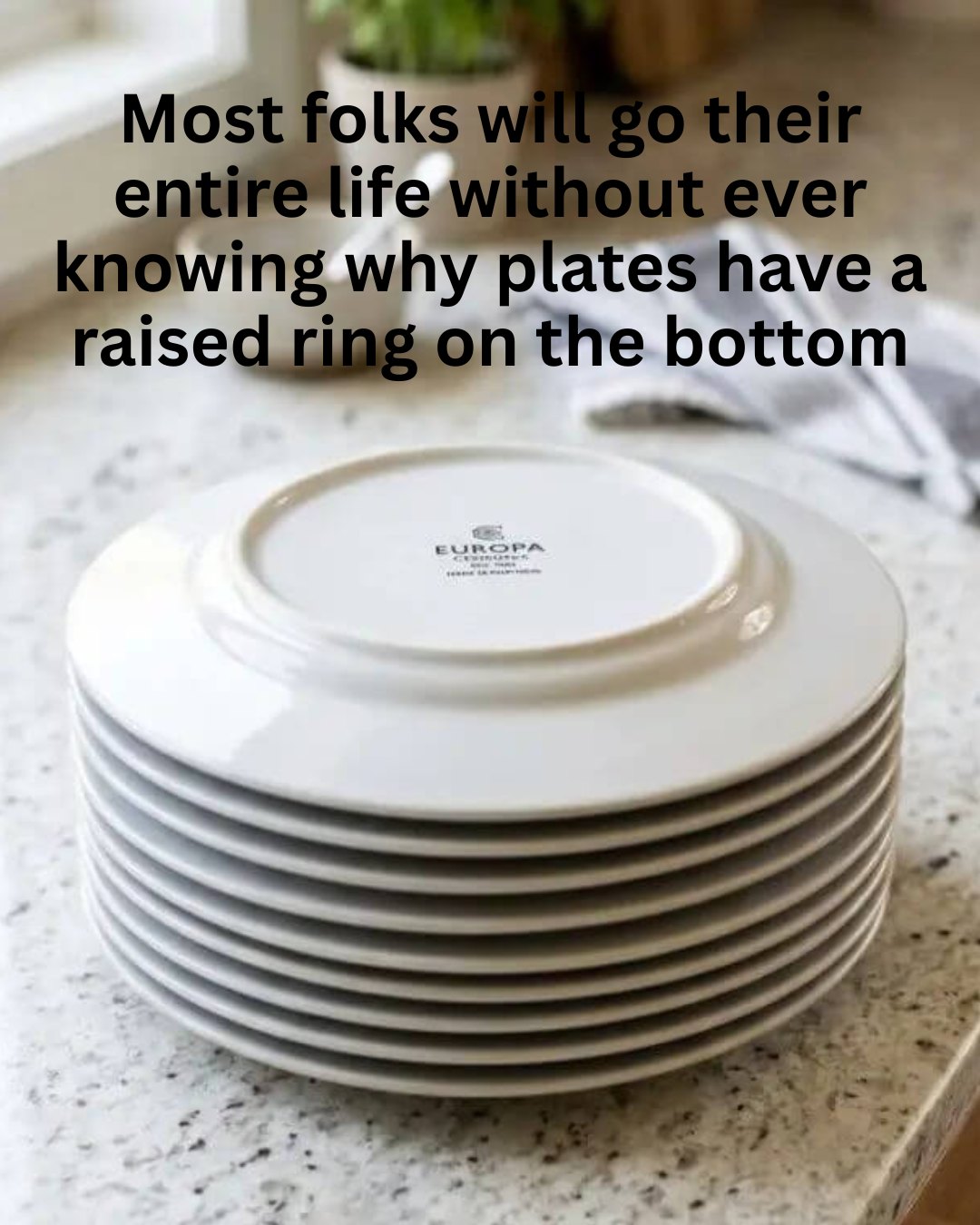
Same idea here.
The ring gives the plate a controlled point of contact, which helps it sit more securely—even if your table isn’t perfectly flat (and let’s be honest, most aren’t).
Hot Food, Cold Surface… That’s Where Problems Start
You ever set a hot plate down and wonder if it might crack?
That’s not just paranoia—it’s actually a real risk.
When a plate heats up unevenly, the material expands at different rates. That stress can lead to cracks. Not always, but often enough that manufacturers plan for it.
And this is where the foot ring quietly steps in.
By lifting the base slightly, it allows air to circulate underneath. That reduces the temperature shock between the hot plate and the cooler table surface.
It’s not dramatic. It’s subtle. But it’s enough to protect the plate from stress damage over time.
Kind of like letting a glass cool slowly instead of rinsing it with cold water right away.
Your Table Is Safer Than You Think
Let’s flip the perspective for a second.
It’s not just about protecting the plate—the table matters too.
Without that raised ring, the entire hot base of the plate would press directly against the surface underneath. And depending on what your table is made of (wood, laminate, plastic), that heat can leave marks. Or worse.
With the ring? Only a thin edge touches the surface.
Less contact = less heat transfer.
It’s a small design decision that saves a lot of tables from those faint, frustrating heat marks you can never quite scrub away.
Ever Had a Plate That Wobbles? This Is Why Most Don’t
You know that annoying wobble when a plate doesn’t sit right?
Now imagine that happening every time you eat.
The circular ring underneath actually helps prevent that. It acts as a stabilizer, distributing weight in a way that compensates for tiny imperfections—whether it’s the table, the plate, or both.
Especially in busy kitchens (think restaurants), this matters a lot.
Because a stable plate means fewer spills. Fewer spills mean fewer accidents. And fewer accidents? Well… fewer broken dishes.
The Stacking Trick You Didn’t Realize Was Intentional
Here’s something most people never think about: plates are designed to stack well on purpose.
That ring underneath creates a small gap when plates are stacked. So instead of sitting flush against each other, they rest slightly apart.
Why does that matter?
Less surface scratching
Less friction when separating them
Easier handling overall
In a restaurant kitchen, where plates are constantly stacked and unstacked, this isn’t just helpful—it’s essential.
At home, it just quietly makes your cabinets feel a bit more organized.
Faster Drying (Yes, Really)
This one’s easy to miss—but once you notice it, it makes total sense.
After washing plates, that little lift from the ring allows air to circulate underneath.
Which means:
Less trapped moisture
Faster drying
Fewer water spots
It’s a small detail, but it improves hygiene too. Less lingering moisture means less chance for bacteria or mildew to hang around.
Not glamorous, but definitely useful.
The Behind-the-Scenes Role During Manufacturing
Now here’s something you probably never thought about.
Plates aren’t just shaped—they’re fired at high temperatures, and during that process, the materials shrink. Not always evenly, either.
The clay and the glaze behave differently as they cool. That can create tension in the structure.
The foot ring helps manage that stress.
It gives the plate a stable base during firing and cooling, helping everything settle properly without cracking or warping.
So yes—before your plate even reaches your kitchen, that ring has already done its job.
It Takes the Scratches So the Plate Doesn’t Have To
Let’s be honest—plates get dragged, slid, stacked, and handled constantly.
If the entire base touched the surface every time, the visible part of your plate would wear down quickly.
For Complete Cooking STEPS Please Head On Over To Next Page Or Open button (>) and don’t forget to SHARE with your Facebook friends
ADVERTISEMENT

