
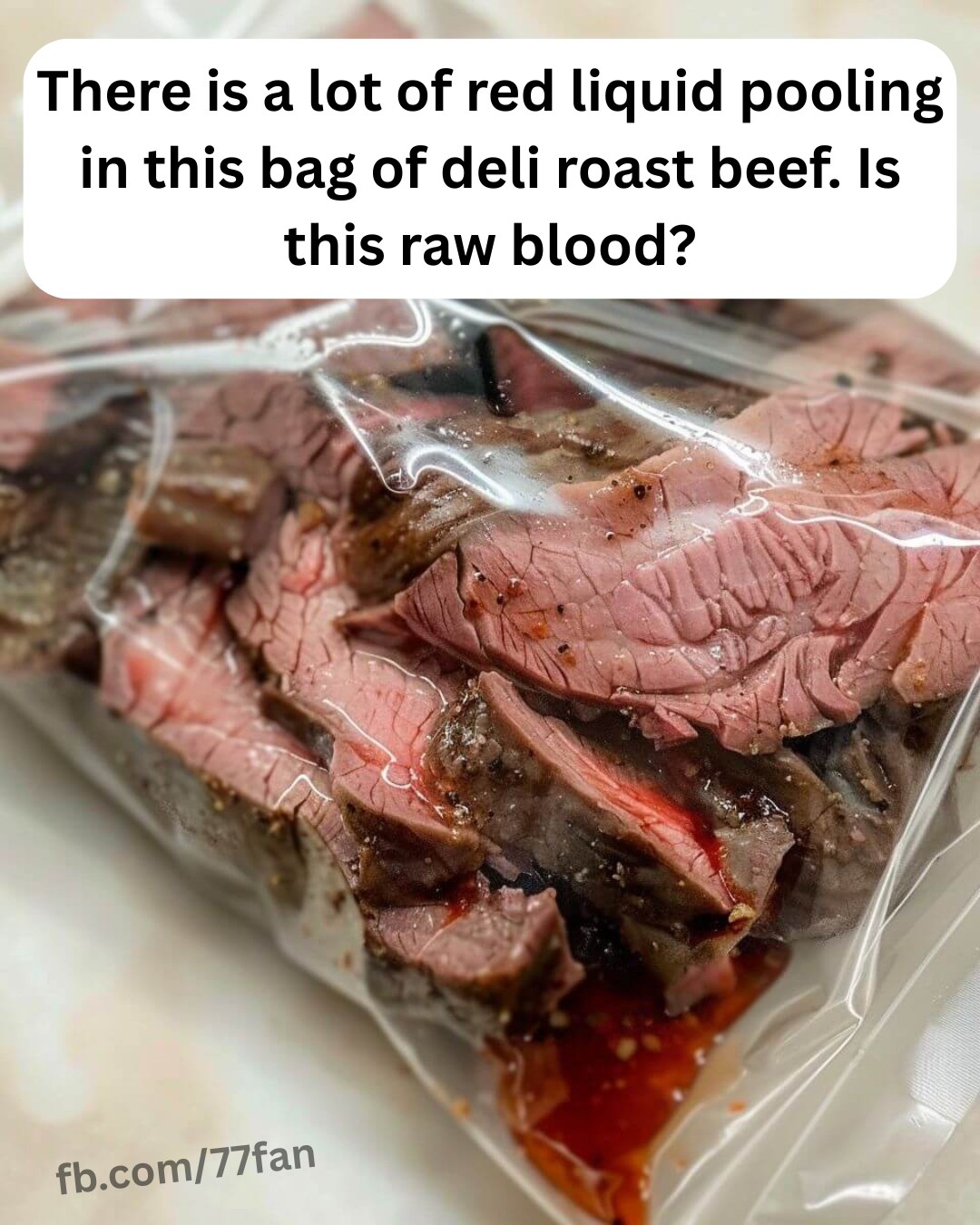
Meet Myoglobin — The Reason Beef Looks Red
Myoglobin is a protein found in muscle.
Its job is to store oxygen in muscle tissue, kind of like a tiny oxygen pantry for hardworking muscles.
Cows use a lot of muscle, which is why beef contains more myoglobin than chicken or pork. That’s also why beef naturally looks darker and redder.
When some of that myoglobin mixes with moisture released from the meat, it creates that reddish liquid people mistake for blood.
Same reason a medium-rare steak can look “bloody” even though it isn’t.
Funny enough, once you realize this, restaurant steaks suddenly make more sense too.
Food science sneaks into everyday life more than we notice.
Why Deli Meat Seems Extra “Juicy”
You may have noticed roast beef tends to show this more than turkey or ham.
That’s not your imagination.
A few things make roast beef especially prone to visible purge:
1. Thin slicing
The thinner the slice, the more cut surfaces there are releasing moisture.
2. Vacuum packaging
Great for freshness. Not so great for hiding juices.
Since the package traps moisture, nothing evaporates.
It just sits there.
3. Beef’s natural makeup
Because beef has more myoglobin, the liquid looks more dramatic.
A little red tint goes a long way visually.
Why Vacuum-Sealed Packages Make It Look Worse
Vacuum sealing is one of those things that works almost too well.
It keeps oxygen out, helps preserve flavor, slows spoilage, and extends shelf life.
Fantastic.
But it also traps every bit of released moisture.
So instead of evaporating or dispersing, it pools.
Sometimes opening the package releases an extra little gush of liquid and makes it seem like there’s way more than there actually is.
It’s partly science.
Partly packaging theatrics.
Is That Liquid Safe?
In normal circumstances?
Yes.
Completely normal.
Some people blot it off with a paper towel.
Some rinse deli meat (not necessary, but people do it).
Some ignore it entirely and pile it straight onto rye bread with mustard.
No wrong answer there.
And if you cook deli roast beef into hot sandwiches, breakfast scrambles, or pan sauces, those juices can even add savory flavor.
Not glamorous, maybe.
But flavorful.
When Red Liquid Isn’t the Issue
Here’s where people sometimes confuse “normal purge” with actual spoilage.
Very different things.
Normal purge:
Thin red or pink liquid
Mild or neutral smell
Meat feels moist but not sticky
Color looks typical for roast beef
Possible spoilage:
Sour or rotten smell
Slimy texture
Gray-green discoloration
Cloudy or odd-colored liquid
Sticky package residue
Trust your senses.
Honestly, your nose is often the best food safety tool in the kitchen.
If something smells wrong, don’t talk yourself out of it.
Can the Color Tell You Anything?
Somewhat.
But not as much as people think.
Bright red liquid?
Usually normal.
Brownish liquid?
Often just oxidation.
A lot of liquid?
Can simply mean the meat released more moisture.
That doesn’t automatically mean low quality.
This surprises people, but even high-quality roast beef can have purge.
Sometimes premium meats actually show it more because they contain fewer additives designed to hold moisture artificially.
A little contradiction there, right? More liquid doesn’t always mean worse meat.
Food likes to keep us humble.
Does More Liquid Mean Lower Quality?
Sometimes people assume:
More liquid = bad roast beef.
Not necessarily.
It can reflect processing choices.
It can also reflect:
How recently it was sliced
Salt levels in the cure
Protein structure after cooking
Packaging pressure
Storage temperature swings
Lots of variables.
It’s not a simple pass-fail test.
If the meat smells fresh, looks good, and feels normal, a little purge isn’t a quality scandal.
It’s lunch.
How to Make It Less Messy
If that package puddle bothers you, a few tricks help.
Transfer it after opening
Move slices into a sealed container.
Use a paper towel layer
Sounds old-school because it is—but it works.
Line the bottom to absorb extra moisture.
Store it cold
Keep deli meats between 34–40°F.
Warmer temps can increase liquid release.
Use it sooner rather than later
Opened deli meat tends to be best within 3–5 days.
(And let’s be honest, roast beef rarely lasts that long around hungry people.)
When You Should Toss It
Now—important distinction.
The red liquid itself usually isn’t the problem.
But if you see purge plus spoilage signs?
Different story.
For Complete Cooking STEPS Please Head On Over To Next Page Or Open button (>) and don’t forget to SHARE with your Facebook friends
ADVERTISEMENT

