
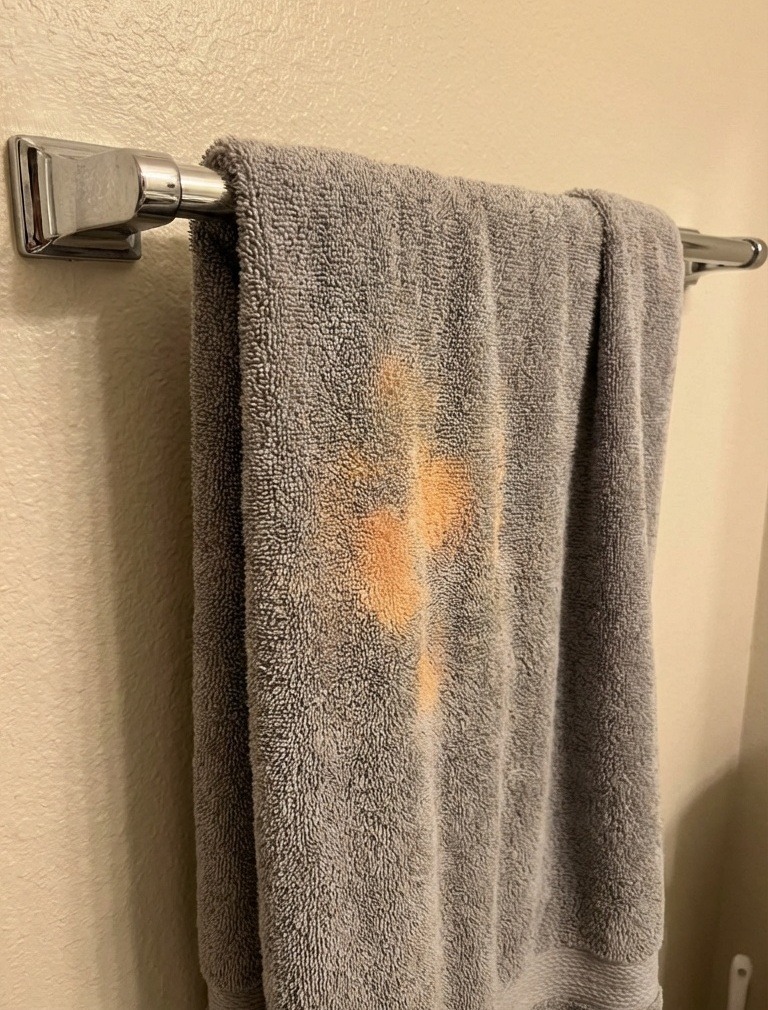
Cause #1: Serratia Marcescens (The Pink/Orange Bacteria)
Despite its scientific name, Serratia marcescens is a common, naturally occurring bacteria that thrives in warm, moist environments. It often appears as pink, orange, or reddish-brown streaks—not because your towels are dirty, but because the conditions are ideal for growth.
Where it grows:
Damp towels left bunched or folded
Shower curtains, bath mats, and sink drains
Toilet bowls and poorly ventilated bathrooms
Why it happens:
Towels stay damp too long between uses
Limited airflow in the bathroom traps humidity
Residual soap, body oils, or fabric softener buildup provides a food source
Why it won’t wash out:
Standard detergents clean surface soil but don’t eliminate the resilient biofilm this bacteria forms. Without targeted treatment, it can return after every wash.
How to Fix It:
First wash: Run towels in hot water with 1 cup of white vinegar (no detergent). The acidity helps break down biofilm and kill bacteria.
Second wash: Follow with a regular cycle using detergent + ½ cup baking soda to neutralize odors and lift residue.
Sun-dry if possible: UV light is a natural disinfectant. Hang towels outside to dry when weather allows.
Prevent recurrence: Always hang towels fully open to air-dry between uses. Avoid leaving them damp in hampers or on hooks.
Cause #2: Iron or Manganese in Your Water
If you have well water, older plumbing, or live in an area with hard water, dissolved iron or manganese may be the culprit. When these minerals oxidize—especially after contact with chlorine bleach or air—they leave behind rust-orange stains that can set permanently if treated incorrectly.
Signs it’s water-related:
Stains appear on brand-new towels
You notice similar discoloration in sinks, tubs, showerheads, or other laundry
Stains worsen or turn darker after using chlorine bleach
Water has a metallic taste or slight orange tint
How to Fix It:
Stop using chlorine bleach immediately: It reacts with iron, creating insoluble rust compounds that bond to fabric.
Use a rust remover: Products like Iron Out, CLR Rust Remover, or Whink Rust Stain Remover can lift mineral stains. Always test on a small, hidden area first.
Try a chelating detergent: Detergents labeled “HE Turbo,” “with mineral fighters,” or “for hard water” contain ingredients that bind minerals and prevent redepositing.
Consider long-term solutions: If you’re on well water, a water softener or iron filter can reduce mineral content at the source.
What Doesn’t Work (And May Make It Worse)
Repeated washing with regular detergent: Won’t break down bacterial biofilm or remove oxidized minerals.
Chlorine bleach: Reacts with iron to create permanent rust stains; can also feed bacterial regrowth by disrupting fabric fibers.
Fabric softener: Coats fibers, reducing absorbency and trapping bacteria or minerals against the towel.
Hot water alone: Without the right additives, heat can set certain stains rather than lift them.
Prevention Tips: Keep Towels Fresh, Stain-Free, and Long-Lasting
Dry thoroughly after every use: Hang towels fully open in a well-ventilated space. Avoid folding or bunching while damp.
Wash weekly, even if they don’t smell: Bacteria and minerals build up over time, even without visible odor.
Skip fabric softener: It reduces towel absorbency and creates a film that traps residues. Use wool dryer balls or a splash of vinegar in the rinse cycle instead.
Monthly maintenance rinse: Add 1 cup white vinegar to the rinse cycle once a month to strip buildup, balance pH, and inhibit bacterial growth.
Clean your washing machine: Run an empty hot cycle with vinegar or a washer cleaner monthly to prevent mold, mineral deposits, or bacteria from transferring to laundry.
Rotate your towels: Having multiple sets ensures each has time to dry fully between uses.
For Complete Cooking STEPS Please Head On Over To Next Page Or Open button (>) and don’t forget to SHARE with your Facebook friends
ADVERTISEMENT

