
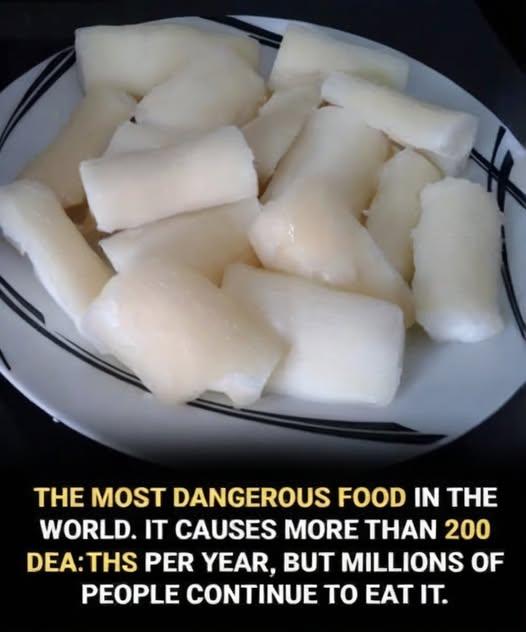
When prepared correctly, cassava is completely safe—and has been eaten for centuries without harm.
Traditional methods are highly effective at removing cyanide:
Safe Preparation Techniques
- Peel thoroughly – toxins concentrate in the skin
- Soak in water for 1–3 days – fermentation breaks down cyanide compounds
- Grate and squeeze – removes toxic liquid
- Sun-dry or ferment – further reduces toxin levels
- Cook thoroughly – boiling, roasting, or frying neutralizes remaining traces
When these steps are followed, cassava becomes a reliable source of energy, fiber, vitamin C, and essential minerals.
Why Cassava Remains Essential
Despite the risks, cassava remains irreplaceable for millions of people because it:
- Grows in harsh environments where other crops fail
- Produces high yields at low cost
- Can be stored underground for months, acting as a living food reserve
- Serves as a base for countless cultural and regional dishes
For many families, cassava isn’t a preference—it’s survival.
Making Cassava Safer for the Future
To reduce harm while preserving food security, global efforts focus on:
- Breeding low-cyanide cassava varieties
- Educating communities on proper processing methods
- Developing rapid cyanide-testing tools
- Promoting industrial processing, which standardizes safety
Countries like Nigeria—the world’s largest cassava producer—are investing heavily in safer production and public education.
Final Reflection: A Food of Survival and Risk
Cassava is a paradox.
It feeds half a billion people—yet kills hundreds each year.
It represents resilience—yet exposes vulnerability.
The real tragedy is not that cassava is dangerous, but that too many people are forced to rely on it without the resources to prepare it safely.
So the next time you enjoy tapioca pudding or a bowl of fufu, remember:
This humble root is more than food.
It is a story of culture, survival, inequality, and the high stakes of food safety.
Sometimes, the most ordinary foods carry the most extraordinary truths.
ADVERTISEMENT

