
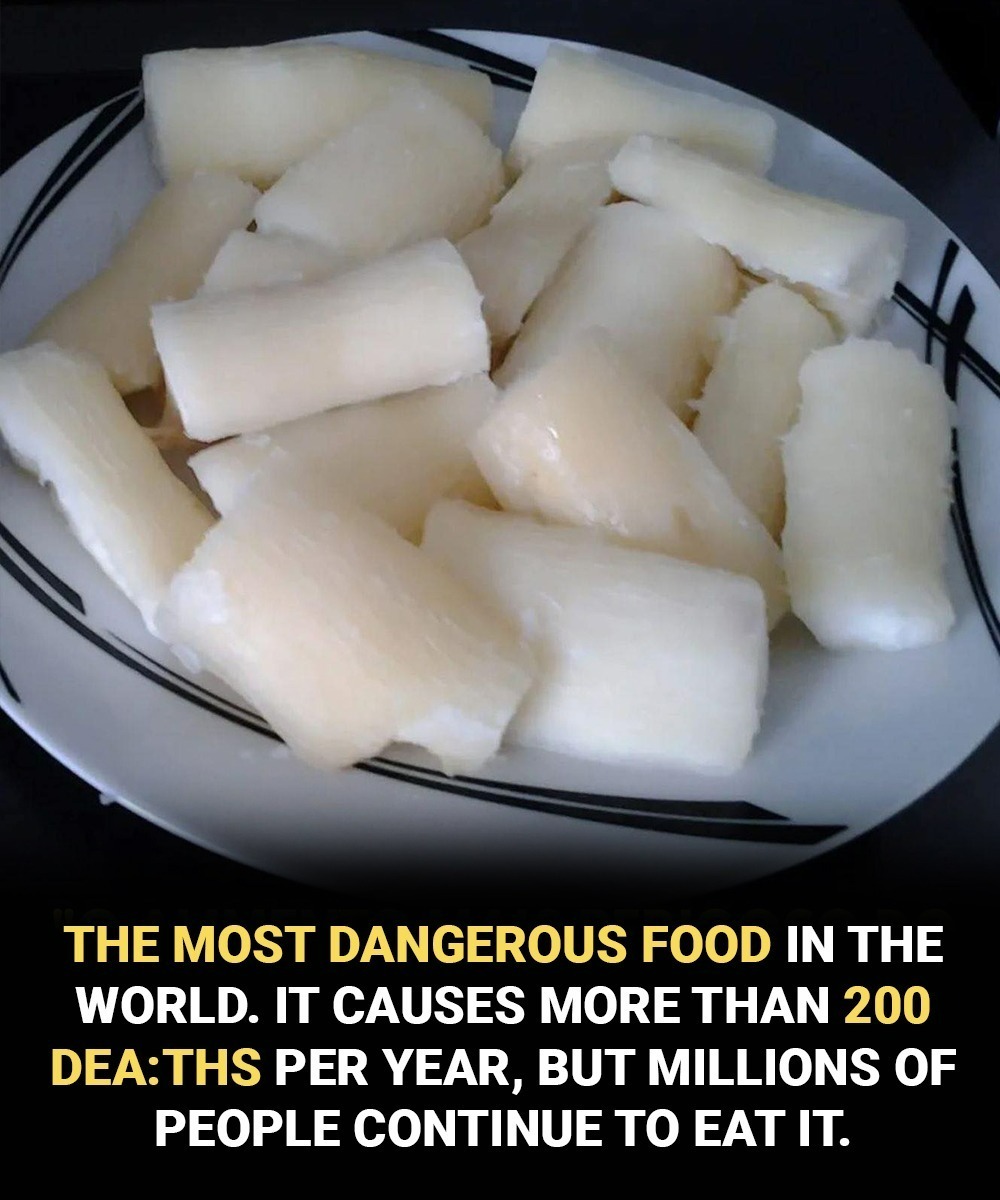
Home⚠️ Cassava: The Life-Saving Root That Can Be Toxic If Prepared Wrong (Here’s How to Stay Safe)
⚠️ Cassava: The Life-Saving Root That Can Be Toxic If Prepared Wrong (Here’s How to Stay Safe)
Discover more
Butter
Buttermilk
Food & Drink
You’ve probably enjoyed cassava without even realizing it:
As tapioca pearls in your bubble tea
As gluten-free flour in bread or pancakes
As boiled or fried root in Caribbean, African, or Latin American dishes
Cassava (Manihot esculenta) is a staple food for over 800 million people worldwide—prized for its drought resistance, high calories, and versatility.
But hidden within this humble root is a potent natural toxin that, if not properly neutralized, can cause acute cyanide poisoning, nerve damage, or even paralysis.
The good news?
With the right preparation, cassava is safe, nutritious, and life-sustaining.
In this essential guide, you’ll learn:
✅ Why cassava contains cyanide—and which types are riskiest
✅ The 3 traditional methods that make it safe to eat
✅ Red flags of improper preparation
✅ Who’s most at risk—and how to protect your family
Because knowledge turns a potential poison into a powerful source of nourishment.
Home⚠️ Cassava: The Life-Saving Root That Can Be Toxic If Prepared Wrong (Here’s How to Stay Safe)
⚠️ Cassava: The Life-Saving Root That Can Be Toxic If Prepared Wrong (Here’s How to Stay Safe)
Discover more
Butter
Buttermilk
Food & Drink
You’ve probably enjoyed cassava without even realizing it:
As tapioca pearls in your bubble tea
As gluten-free flour in bread or pancakes
As boiled or fried root in Caribbean, African, or Latin American dishes
Cassava (Manihot esculenta) is a staple food for over 800 million people worldwide—prized for its drought resistance, high calories, and versatility.
Discover more
Herbs & Spices
Baked Goods
Desserts
But hidden within this humble root is a potent natural toxin that, if not properly neutralized, can cause acute cyanide poisoning, nerve damage, or even paralysis.
The good news?
With the right preparation, cassava is safe, nutritious, and life-sustaining.
In this essential guide, you’ll learn:
✅ Why cassava contains cyanide—and which types are riskiest
✅ The 3 traditional methods that make it safe to eat
✅ Red flags of improper preparation
✅ Who’s most at risk—and how to protect your family
Because knowledge turns a potential poison into a powerful source of nourishment.
🌍 Why Cassava Matters—And Why It’s Risky
Discover more
Dairy & Eggs
Vinegar
eggs
Cassava comes in two main types:
Sweet cassava: Lower in toxins, safer for home use
Bitter cassava: High in cyanogenic glycosides (like linamarin)—must be processed before eating
When cassava is chewed, cut, or crushed, enzymes in the root convert these compounds into hydrogen cyanide (HCN)—a fast-acting poison that blocks cellular oxygen use.
How Traditional Cultures Safely Prepare Cassava (Science-Backed Methods)
For centuries, communities have used time-tested techniques to detoxify cassava. These methods work by breaking down cyanide compounds and allowing them to evaporate:
1. Peeling + Thorough Cooking (For sweet cassava only)
ADVERTISEMENT

