
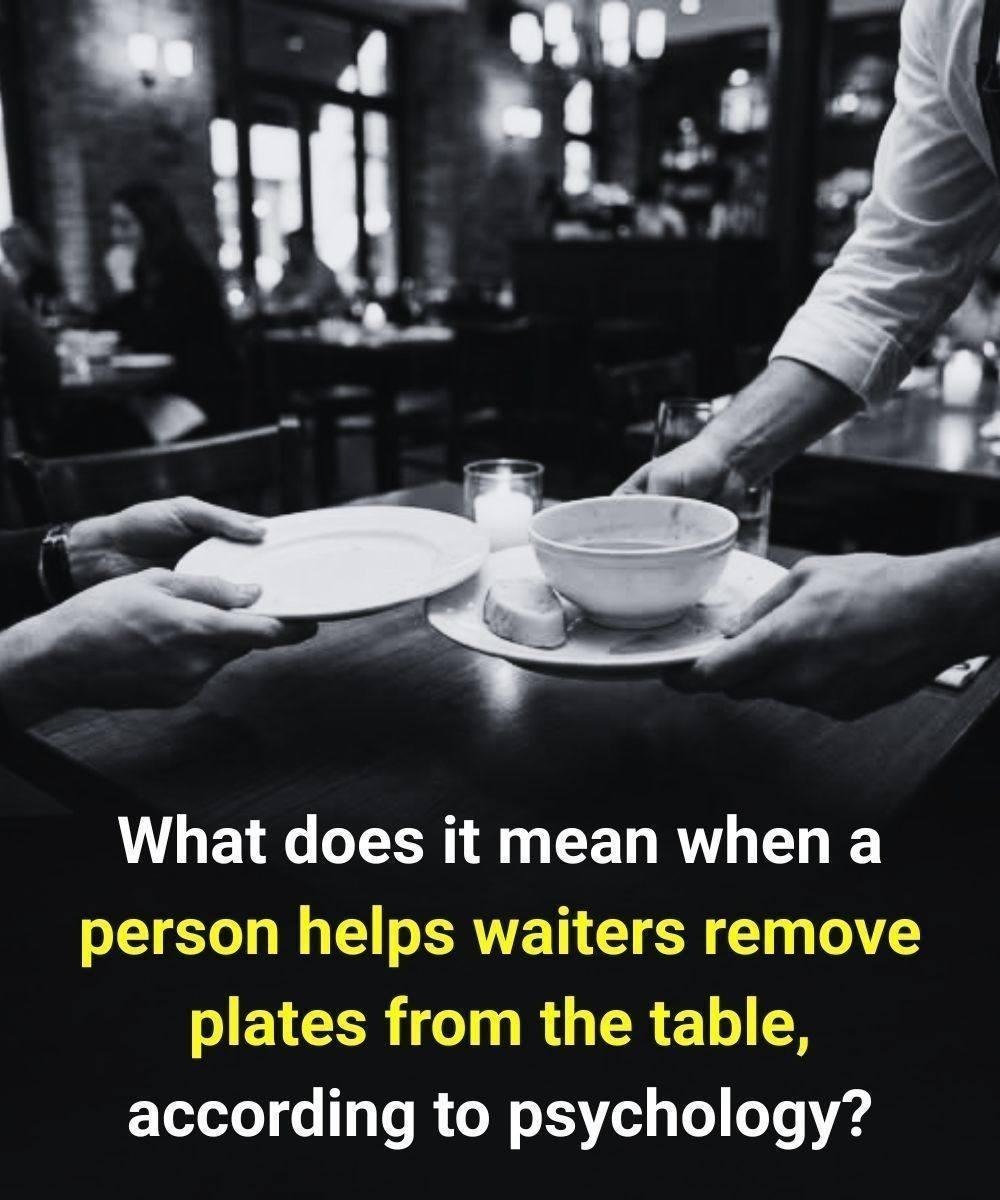
For many extroverts, offering to clear plates feels natural, even rewarding.
Why Extroverts Often Help
The Psychology Behind It
Social engagement energizes them
Interacting with servers or fellow diners feels invigorating, not draining
Broader attentional scope
They’re more likely to notice a server’s workload or a messy table as a cue to act
High reward sensitivity
Positive social feedback (a smile, a “thank you”) feels especially satisfying
Comfort with spontaneity
Jumping in to help aligns with a preference for action over prolonged analysis
🧠 Research note: A study in Personality and Individual Differences found that extroverts scored higher on “spontaneous helping” behaviors—actions taken quickly in response to observable need.
What It Might Look Like:
✅ Stacking plates mid-conversation without breaking stride
✅ Calling out “Can I take these?” to a passing server
✅ Encouraging others at the table to help too
✅ Feeling genuinely pleased by the brief social exchange
💬 Extrovert perspective: “Helping feels like connecting. It’s a tiny moment of teamwork—and I love that.”
The Introvert’s Instinct: “Is This Welcome?”
For many introverts, the same moment triggers a different internal calculus.
Why Introverts Often Pause
The Psychology Behind It
Energy conservation
Restaurants are already socially stimulating; adding interaction can feel draining
Preference for clear roles
“The server’s job is to clear; my job is to enjoy the meal” feels respectful
Sensitivity to social ambiguity
Uncertainty about whether help is wanted can trigger hesitation
Deep processing style
They may weigh multiple factors: “Will this help? Could it interrupt? Is it culturally appropriate?”
🧠 Research note: Introverts often excel at deliberate helping—thoughtful, planned acts of support—rather than spontaneous gestures. Both are valuable.
What It Might Look Like:
✅ Waiting to see if the server approaches first
✅ Offering help quietly to one person rather than announcing it to the table
✅ Feeling relief when the server handles clearing without intervention
✅ Preferring to show appreciation through a generous tip or kind words instead
💬 Introvert perspective: “I notice the need. I just express my care differently—through respect for boundaries and thoughtful observation.”
🍽️ The Restaurant as a Social Laboratory
Restaurants are unique social spaces where norms, roles, and personalities intersect. Understanding this context helps explain why the “plate-stacking moment” feels so revealing.
Key Social Dynamics at Play
Factor
How It Influences Helping Behavior
Cultural norms
In some cultures, helping clear is expected; in others, it may imply the staff is inadequate
Restaurant type
Fine dining vs. casual diner vs. family-style all carry different unspoken rules
Group dynamics
Helping may feel more natural with close friends than with colleagues or new acquaintances
Server cues
A server who makes eye contact or says “I’ll get these” changes the social calculus
Personal history
Past experiences (e.g., having worked in hospitality) can shape one’s instinct to help
🌍 Cultural insight: In many East Asian cultures, helping clear may be seen as overstepping; in parts of the U.S. or Europe, it may be viewed as polite. Context matters deeply.
For Complete Cooking STEPS Please Head On Over To Next Page Or Open button (>) and don’t forget to SHARE with your Facebook friends
ADVERTISEMENT

