
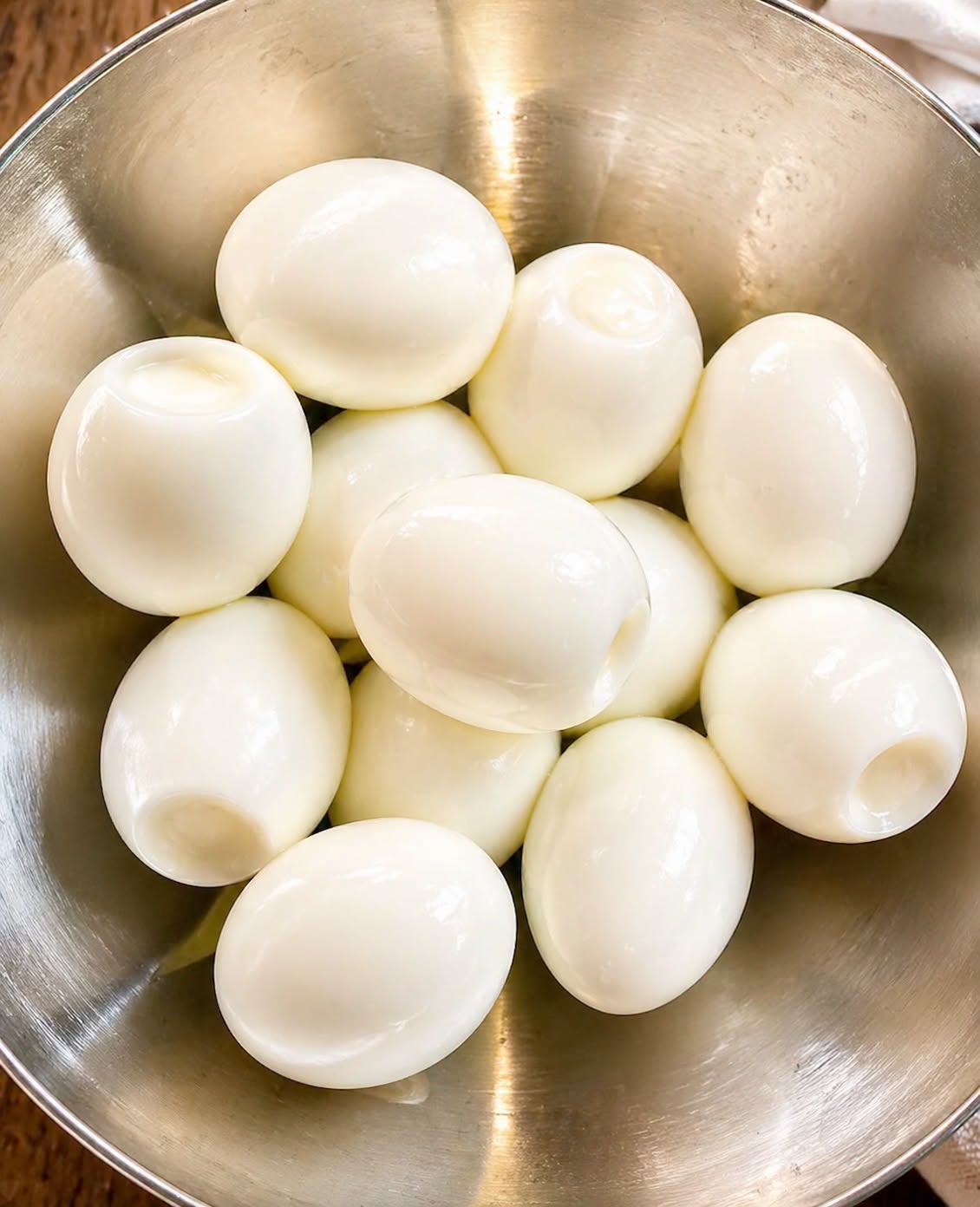
Let’s be honest: nothing tries your kitchen patience quite like a stubborn eggshell.
You boil your eggs. You cool them down just right. Maybe you send up a little prayer to Saint Julia Child. And then—crack—tiny shards everywhere, whites torn and ragged like some sort of kitchen crime scene. If you’ve ever made deviled eggs for a family party or potluck, you know that brand of humiliation all too well. (Ask me how I know.)
But don’t start blaming your ancestors or your oven. It turns out, there’s real science (and a few little tricks) for getting those peels to slip right off. Let’s go step by step, friend.
And honestly? Perfectly peeled eggs are one of those housewifey life skills that feel ridiculously good, like folding a fitted sheet without cussing or slathering butter on toast all the way to every single edge.
Step One: It Actually Starts Before You Boil
Alright, here’s the deal—the whole “older eggs peel better” thing is sort of true… but not quite the whole story.
Sure, really fresh eggs do cling to their shells with the force of a toddler holding tight to a blanket. But age isn’t everything at play here. It actually boils (ha!) down to science: those proteins in the whites, and how they bond to the membrane as things heat up. And wouldn’t you know, you can tweak those things a bit.
Start with cold water or steam? Folks always have opinions. Personally, I find that steaming wins the day. The whites set up faster, which seems to help keep things from getting so clingy later. If you haven’t tried it, give it a whirl next time.
Salt, vinegar, baking soda? People swear by tossing in a pinch of baking soda to the pot, hoping to raise that pH and loosen the membrane a smidge. Is it a miracle fix? Not really. Does it make a difference sometimes? Sure does—but not every single time.
Timing’s important, too—way more than most home cooks realize. Cook your eggs too long, and you’ll see that telltale greenish ring around the yolk, plus a texture that could bounce across the kitchen floor. I go for about 9–11 minutes, either gently boiling or steaming. Don’t go with a pot that’s trying to reenact Old Faithful—think of it as a cozy bubble bath for your eggs.
And if you’re making a big batch—maybe for Easter brunch or meal prep on a Sunday night—keep your timing tight. A few seconds too long, and you’ll end up with dry yolks and a week’s worth of regret.
The Ice Bath: More Than Just a Cool Down
Alright, so you’ve cooked those eggs just right. Now what?
For Complete Cooking STEPS Please Head On Over To Next Page Or Open button (>) and don’t forget to SHARE with your Facebook friends
ADVERTISEMENT

