
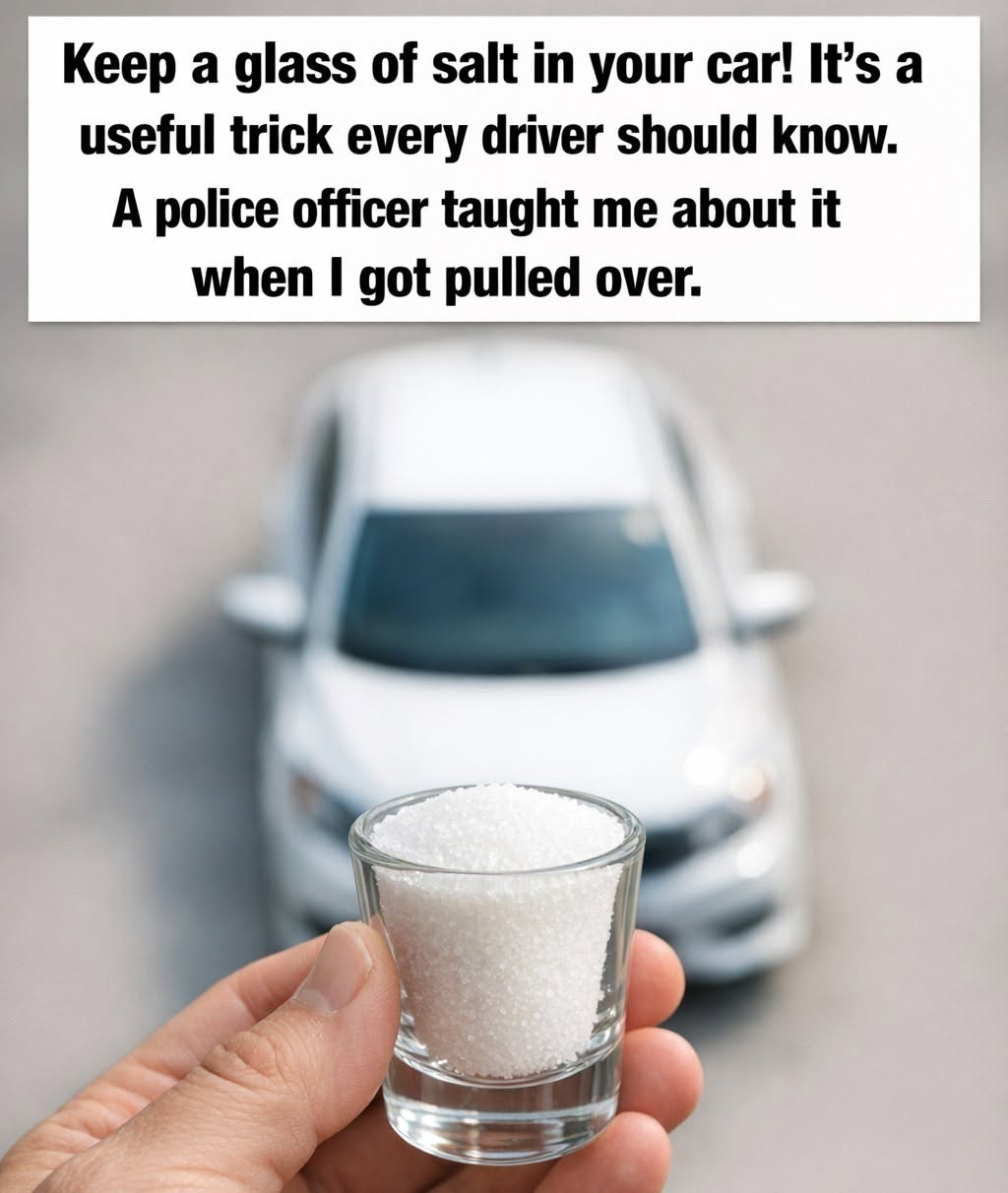
If you’re stuck on an icy patch, salt can provide immediate traction.
How to use it:
Sprinkle a handful of salt directly in front of your drive wheels (or all wheels if needed).
The salt creates a gritty texture that helps tires grip.
It also begins melting the ice surface slightly, improving traction further.
✅ Best for: Getting unstuck from icy driveways, parking spots, or slippery inclines.
⚠️ Important: Use sparingly. Salt corrodes metal and damages concrete. Sweep or rinse away after use when possible.
2. Make a DIY De-Icer Solution
Salt mixed with water creates an effective de-icing spray for windows and locks.
Recipe:
Mix 1 part salt with 2–3 parts warm water.
Add a splash of rubbing alcohol (optional, speeds evaporation).
Pour into a spray bottle.
How to use:
Spray on frozen windows, door locks, or keyholes.
Wait 1–2 minutes, then wipe or scrape away ice.
For locks: Spray directly into the keyhole, wait, then insert key gently.
✅ Advantages:
Cheaper than commercial de-icers
Works quickly on thin ice
Readily available ingredients
⚠️ Cautions:
Do not use on painted surfaces—salt can damage clear coat and cause rust
Rinse windows with water after use to prevent salt residue
Avoid using on windshields with cracks (salt water can seep in and worsen damage)
3. Extinguish Small Grease or Electrical Fires
Salt can smother small kitchen-type fires (like a grease fire from a portable stove) or electrical fires.
How it works: Salt cuts off oxygen and absorbs heat, helping to extinguish flames.
When to use:
Small grease fires (e.g., from camping stove)
Electrical fires (salt is non-conductive when dry)
As a backup if a fire extinguisher isn’t available
⚠️ Critical safety notes:
Only for small, contained fires. For anything larger, evacuate and call emergency services immediately.
Never use water on grease or electrical fires.
Salt is a last resort—a proper ABC fire extinguisher is far safer and more effective.
Keep a fire extinguisher in your vehicle if you frequently travel in remote areas or camp.
4. Clean Rust or Corrosion (As an Abrasive)
Salt mixed with lemon juice or vinegar creates a mild abrasive paste for removing surface rust.
Recipe:
Mix 2 parts salt with 1 part lemon juice or white vinegar.
Apply to rusty areas (battery terminals, tools, small metal parts).
Scrub gently with a brush or cloth.
Rinse thoroughly and dry completely.
✅ Best for: Cleaning battery terminals, small tools, or metal accessories.
⚠️ Cautions:
Do not use on painted surfaces, chrome, or aluminum—salt causes corrosion.
Always rinse thoroughly; salt residue accelerates rust.
This is for minor surface rust only. Severe corrosion requires professional treatment.
5. Emergency Cleaning Agent
Salt can help clean certain messes in a pinch.
Useful for:
Absorbing liquid spills: Sprinkle salt on wet stains (coffee, juice) in the car, let sit 10–15 minutes, then vacuum. Salt absorbs moisture and odors.
Removing odors: Place an open container of salt under the seat to absorb musty smells (replace monthly).
Cleaning windshield wipers: Wipe blades with a damp cloth dipped in salt water to remove grime and improve performance.
✅ Advantages: Non-toxic, inexpensive, readily available.
⚠️ Note: For serious odors or stains, professional detailing or enzymatic cleaners are more effective.
🎒 What to Keep in Your Winter Emergency Kit
If you’re keeping salt in your car for emergencies, here’s what else should be in your kit:
Item
Purpose
**Container of salt **(1–2 lbs)
Traction, de-icing, minor cleaning
Ice scraper & snow brush
Clear windows safely
Sand or cat litter
Better traction than salt; less corrosive
Blankets or sleeping bag
Warmth if stranded
Hand/foot warmers
Immediate heat source
Flashlight + extra batteries
Visibility in darkness
Jumper cables or portable battery booster
Dead battery solution
**Shovel **(compact)
Dig out snow
Water + non-perishable snacks
Hydration and energy
First aid kit
Medical emergencies
**Phone charger **(portable)
Communication
💡 Pro tip: Store salt in a sealed plastic container to prevent moisture absorption and spills. Label it clearly.
For Complete Cooking STEPS Please Head On Over To Next Page Or Open button (>) and don’t forget to SHARE with your Facebook friends
ADVERTISEMENT

