
I’ve been there.
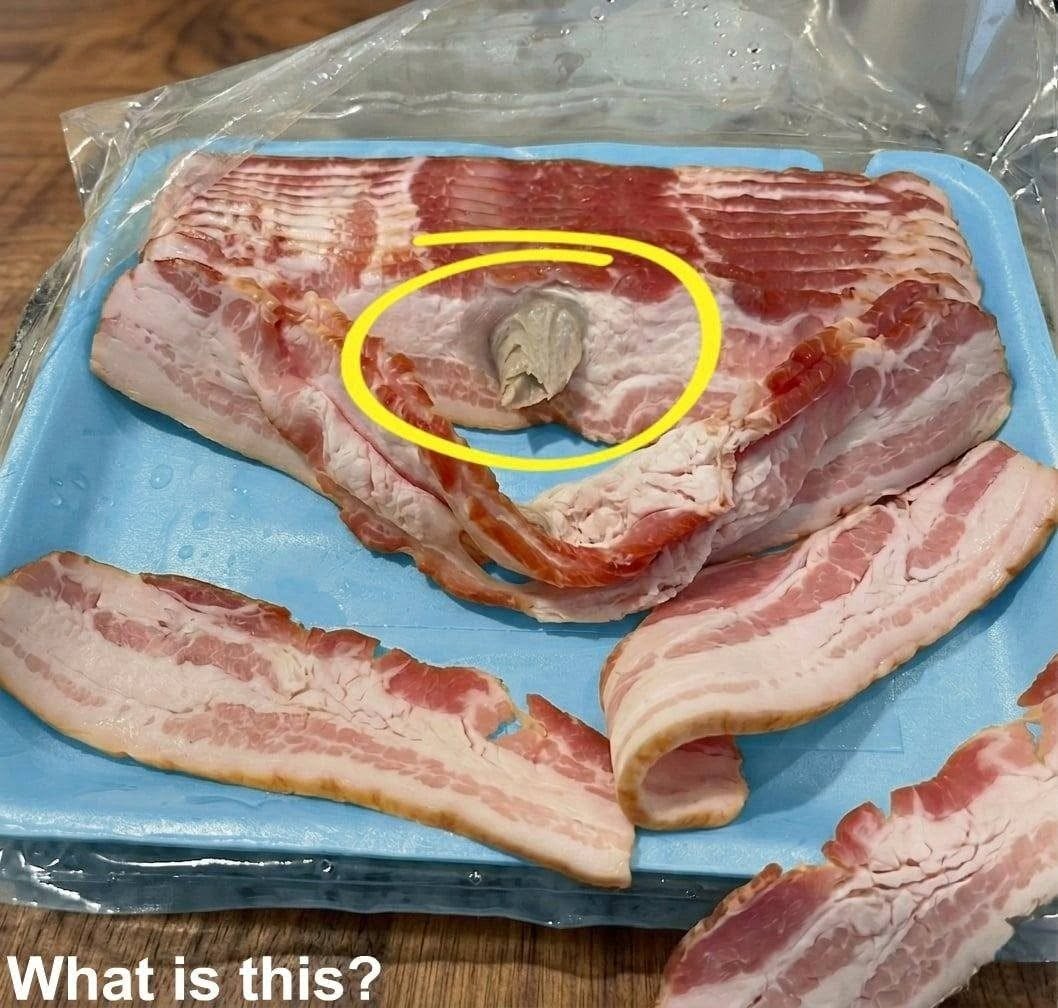
You open a package of bacon, anticipating that familiar sizzle and smoky aroma. Then you see it: a pale, rubbery lump nestled between perfectly pink slices. Smooth. Oddly shaped. Utterly out of place.
Your stomach drops.
Is this packaging? Contamination? Something that shouldn’t be there?
In that instant, every commitment you’ve made to clean eating and mindful cooking feels quietly undermined. If something like this can slip into a staple as basic as bacon, what else might you be missing?
I felt that doubt too. But instead of tossing the package or spiraling into worry, I took a breath—and learned the truth.
It wasn’t a hazard. It wasn’t contamination. It was simply a natural variation.
And knowing that changed everything.
🔍 What That “Mystery Lump” Actually Is
That pale, smooth, rubbery piece you found? It’s most likely one of these harmless things:
✅ A Fold of Skin or Connective Tissue
During curing and tumbling, layers of pork belly can fold over and fuse
Creates a smooth, pale pocket that looks “wrong” but is 100% natural
Completely safe to eat (though you can trim it if the texture bothers you)
✅ A Concentrated Pocket of Fat + Collagen
Bacon isn’t perfectly uniform—fat distribution varies naturally
When chilled and sliced, these pockets can appear as distinct, rubbery nodules
They’ll render down when cooked (or can be trimmed beforehand)
✅ A “Seam” from Processing
Commercial bacon is often pressed, formed, and sliced from large sections
Where pieces meet, you might see a subtle seam or denser area
Looks unusual but poses no safety risk
💡 Key insight: Industrial food production is efficient—but it doesn’t erase biology. Pigs aren’t manufactured; they’re raised. Natural variation is normal.
🥓 How to Tell: Normal Variation vs. Actual Concern
Not sure if what you’re seeing is harmless? Use this quick guide:
For Complete Cooking STEPS Please Head On Over To Next Page Or Open button (>) and don’t forget to SHARE with your Facebook friends
ADVERTISEMENT

