
Experience, Awareness, and Emotional Memory
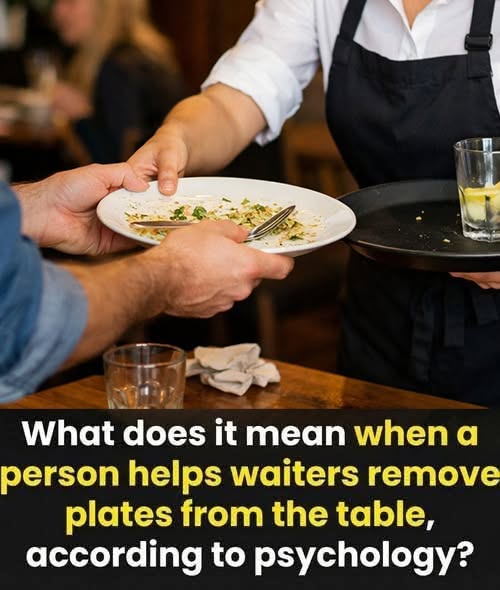
For many people, helping a waiter is rooted in lived experience. Former restaurant workers, in particular, understand the physical strain and emotional labor that come with long shifts, heavy trays, and constant multitasking.
“As a former server, my family and I do this every time we eat out,” one person wrote on Facebook. “It’s a small gesture, but a little kindness goes a long way—especially when they’re busy. When customers did this for me, I was so grateful.”
Others aren’t drawing from past jobs, but from heightened situational awareness. These individuals naturally notice signs of stress—full hands, rushed movements, tired expressions—and respond without calculation. They help not because it’s expected, but because they recognize another person’s burden.
“It shows you have class,” another commenter wrote. “You’re not above getting your hands dirty to help someone.”
The Psychology of Prosocial Behavior
From a psychological standpoint, helping a waiter clear plates or organize a table is a textbook example of prosocial behavior—actions intended to benefit others without expecting anything in return.
People who engage in these behaviors tend to be highly attuned to nonverbal cues. They sense when assistance is needed and step in naturally, synchronizing with the environment rather than standing apart from it.
Researchers describe these actions as low-cost, high-impact behaviors. While they may seem insignificant, they can ease stress, prevent burnout, and foster moments of gratitude during demanding workdays. Studies also show that individuals who regularly perform acts of kindness often experience improved mental health, higher life satisfaction, and a stronger sense of purpose.
In other words, helping others helps the helper too.
For Complete Cooking STEPS Please Head On Over To Next Page Or Open button (>) and don’t forget to SHARE with your Facebook friends
ADVERTISEMENT

