
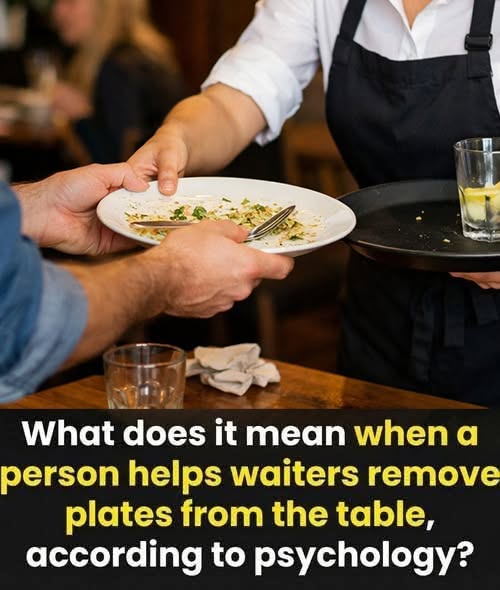
What does it mean when a person help waiters, according to psychology
by Stephen King Leave a Comment
Share
Tweet
If you’ve ever found yourself quietly stacking plates, gathering empty glasses, or tidying a restaurant table before the server returns, you may think of it as nothing more than basic politeness. But psychologists suggest that this seemingly small gesture reveals something far deeper about a person’s character, emotional intelligence, and social awareness.
What looks like a minor act of courtesy can, in fact, offer a window into how the human brain processes empathy, responsibility, and connection with others.
A Quiet Helping Hand
In busy restaurants—where clinking glasses blend with shouted orders and hurried footsteps—it’s not unusual to see a guest subtly step in to ease a server’s workload. These individuals don’t announce what they’re doing. They don’t seek praise. Often, the action happens almost unconsciously.
Yet within psychology, these moments matter.
“When I see this gesture, it means the person truly worries about improving the day of the person they’re helping,” explains Dr. Martin L. Hoffman, a clinical psychologist and professor emeritus at New York University. Hoffman, whose research has shaped modern understanding of empathy and moral development, describes such micro-acts of kindness as quiet but powerful expressions of social care.
They are not performative. They are instinctive.
For Complete Cooking STEPS Please Head On Over To Next Page Or Open button (>) and don’t forget to SHARE with your Facebook friends
ADVERTISEMENT

