
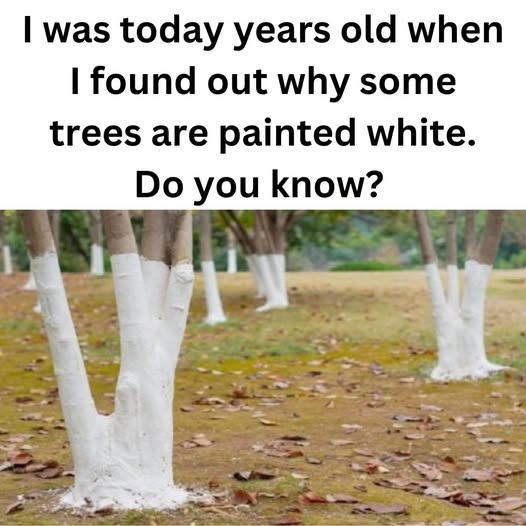
White paint reflects sunlight.
Because white surfaces absorb less heat than dark surfaces, painting the trunk white reduces how much the bark warms up during the day. This helps:
Minimize temperature swings.
Reduce bark expansion and contraction.
Lower the risk of cracking.
Protect against long-term winter damage.
You can think of it as sunscreen for trees.
Which Trees Are Usually Painted?
White trunk paint is most common on:
Fruit trees (apple, peach, pear, cherry)
Newly planted saplings
Thin-barked ornamental trees
Trees in orchards
Young landscape trees in cold climates
Mature trees with thick bark are usually less vulnerable and don’t require this treatment.
Other Benefits of White Tree Paint
While sunscald prevention is the primary reason, there are additional benefits.
1. Insect Protection
Cracked bark can invite insects. By preventing splitting, white paint indirectly helps deter:
Borers
Beetles
Certain larvae
In some cases, tree paint mixtures may also include mild pest deterrents.
2. Rodent Damage Visibility
White paint can make it easier to spot:
Chew marks
Bark damage
Insect entry points
This allows early intervention before serious harm occurs.
3. Reduced Stress in Newly Planted Trees
Young trees experience stress while establishing roots. Temperature stabilization helps them focus energy on growth rather than repairing damage.
What Type of Paint Is Used?
Tree professionals do not use standard household paint directly.
The recommended mixture is:
Water-based (latex) white paint
Diluted 1:1 with water
Why dilute it?
To allow the bark to breathe
To prevent moisture trapping
To avoid chemical stress on the tree
Oil-based paints are not recommended because they can damage bark tissue.
How It’s Applied
For Complete Cooking STEPS Please Head On Over To Next Page Or Open button (>) and don’t forget to SHARE with your Facebook friends
ADVERTISEMENT

