
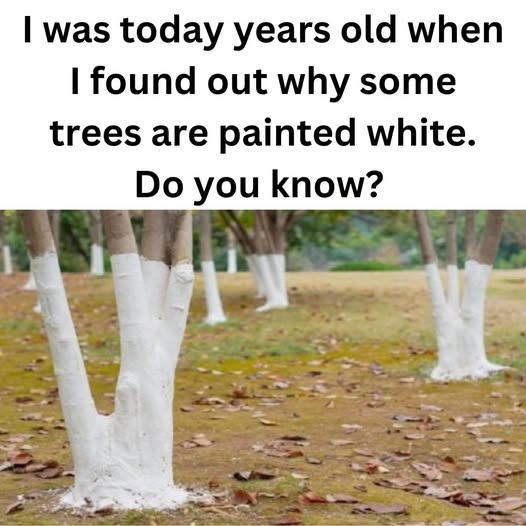
f you’ve ever driven past orchards, parks, or roadside plantings and noticed tree trunks painted white, you may have wondered what it means. Is it a code? A warning? A treatment? The answer is actually practical rather than symbolic.
In most cases, white paint on tree trunks is used to protect the tree — especially during colder months.
While colored markings like orange or purple can indicate logging, property boundaries, or tree removal, white-painted trunks usually serve a protective and preventative purpose.
Let’s explore why this practice exists, how it works, and when it’s most commonly used.
The Main Reason: Preventing Sunscald
The most common reason trees are painted white is to prevent a condition called sunscald.
What Is Sunscald?
Sunscald occurs during winter when there are large temperature fluctuations between day and night. Here’s what happens:
During the day, the sun warms the tree trunk.
The bark expands slightly due to heat.
At night, temperatures drop quickly.
The bark contracts rapidly.
This repeated expansion and contraction can cause cracks or splits in the bark. These cracks can damage the tree’s vascular system, making it more vulnerable to disease, insects, and long-term structural weakness.
Young trees and thin-barked species are especially susceptible.
How White Paint Helps
For Complete Cooking STEPS Please Head On Over To Next Page Or Open button (>) and don’t forget to SHARE with your Facebook friends
ADVERTISEMENT

