
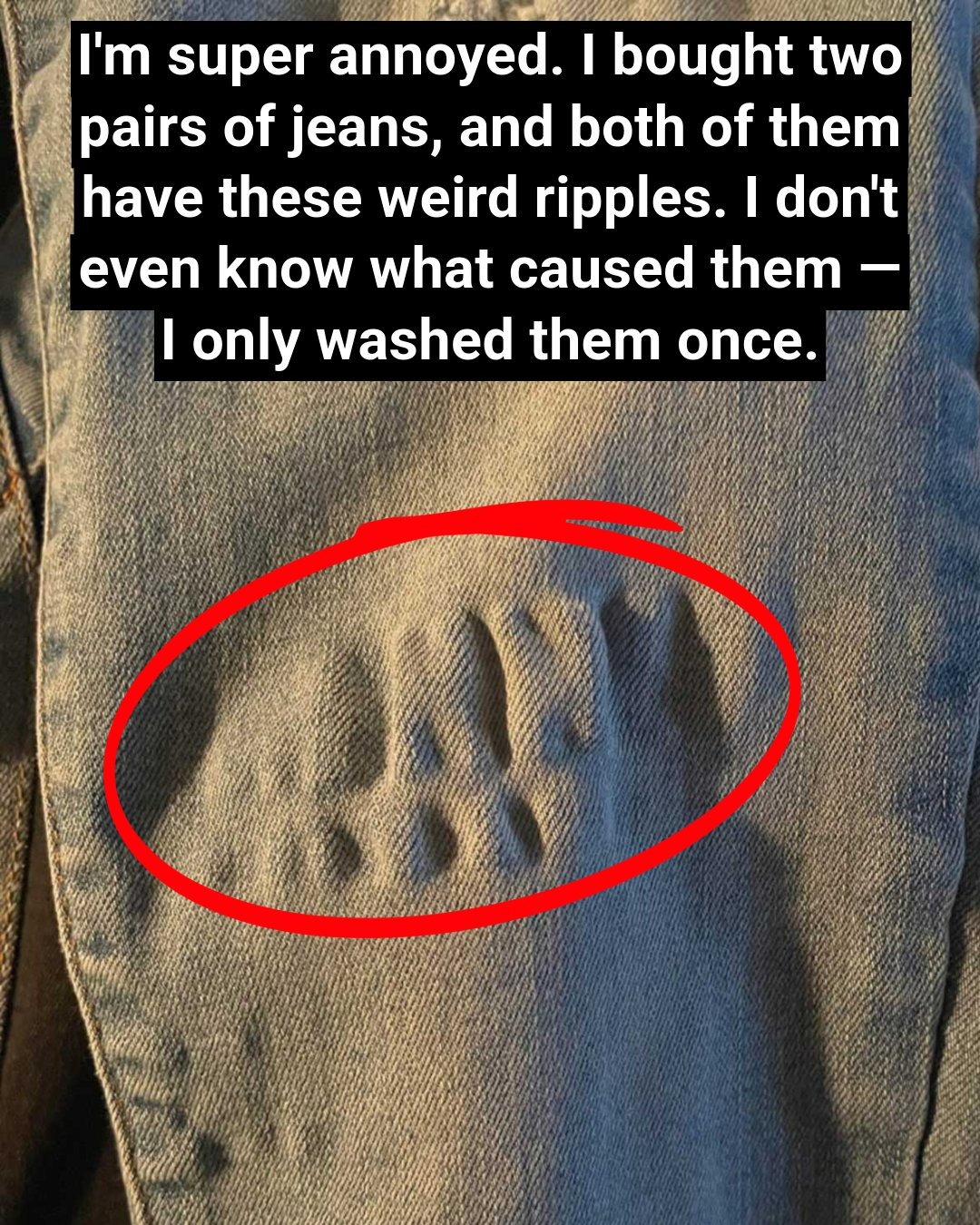
I don’t know about you, but there’s nothing more annoying to me than pulling my favorite pair of jeans out of the wash and finding strange ripples all over them. Like, what happened in there? Were they battling for their lives in the spin cycle?
It’s the annoying part because they fit perfectly one moment, and in the blink of an eye, they’re knotted on your body like some washing machine was chewing them up and spitting them out.
If you’ve ever stood there, staring at your formerly-smooth jeans and asking yourself, “Where did things go wrong?”—you’re in the right spot.
And this isn’t any old fabric malfunction. There’s a reason why it happens—several, actually. Almost all popular jeans today are woven with some stretch, which helps with comfort but also makes them more vulnerable to damage. The biggest culprit? Heat. But the dryer isn’t solely to blame. How you wash, dry, and even store your jeans can be a game changer.
Let’s break it all down—so you can keep your favorite pair looking smooth, fitted, and fresh.
🔬 Why Do Jeans Ripple, Pucker, or Wrinkle in the Wash?
After ruining more than one pair of jeans, I did some digging to find out what’s really going on. It turns out, those fibers are doing a lot when they go for a spin in the washer and dryer.
The #1 Culprit: Heat Deteriorates Lycra (Elastane)
These days, most jeans aren’t 100% cotton. They often have a bit of **Lycra **(also called elastane or spandex) blended in—usually 1–5%—so they have just the right amount of stretch.
But here’s the problem: Lycra doesn’t like heat. In fact, it kind of hates it.
Temperature
Effect on Lycra/Elastane
**Above 100°F **(38°C)
Fibers begin to weaken and lose elasticity
**Above 140°F **(60°C)
Permanent damage; fibers break down, causing warping
**Dryer heat **(any setting)
Accelerates degradation, especially on high heat
When Lycra breaks down, the denim surrounding it begins to warp as well. That’s why you see those ripples or puckering in random spots—rather than overall shrinkage, as is the case with 100% cotton.
⚠️ Key insight: Once Lycra has lost its elasticity, there’s really no turning back. The damage is permanent.
For Complete Cooking STEPS Please Head On Over To Next Page Or Open button (>) and don’t forget to SHARE with your Facebook friends
ADVERTISEMENT

