
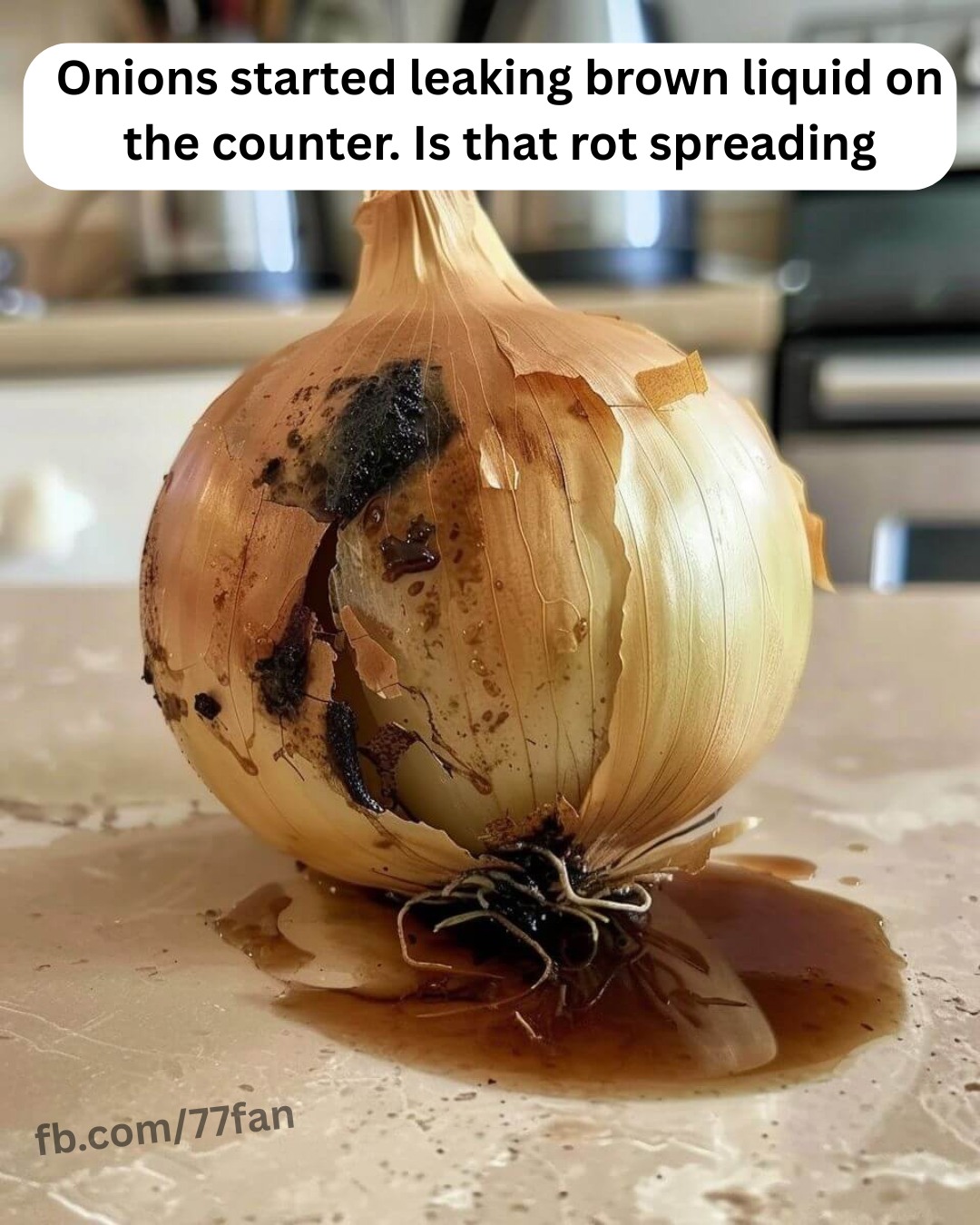
Unlike moldy bread or strawberries that visibly spoil on the outside first, onions often decay internally before showing dramatic exterior signs. That’s because bacteria thrive in moist environments trapped beneath the outer layers.
One common culprit is bacterial soft rot. The bacteria enter through tiny openings, bruises, or cuts and slowly digest the onion’s structure from the inside. Sounds gross because, well, it kind of is.
The onion gradually turns:
soft
watery
mushy
darker in color
Eventually, pressure builds inside the layers, and liquid begins leaking out.
You know what’s tricky? Sometimes only one section is affected while the rest still appears usable. Other times the entire onion is secretly collapsing beneath the skin.
That’s why texture matters so much.
The Texture Test Most People Forget
People often rely only on appearance, but texture tells you far more.
Pick up the onion.
Does it feel:
unusually soft?
squishy near the base?
hollow in spots?
slimy around the outer layers?
Those are stronger spoilage indicators than color alone.
Fresh onions should feel dense and crisp. Even sweeter varieties like Vidalia onions should still hold their shape firmly.
If the onion feels mushy like an overripe peach, it’s done.
And here’s the thing — once bacterial decay spreads deeply inside, cutting away a tiny bad section usually won’t save it.
The Smell Gives It Away Almost Every Time
Fresh onions smell sharp and pungent. They may make your eyes water, but the scent still smells “clean” in a weird onion way.
Spoiled onions smell completely different.
People describe rotten onions as:
sour
fermented
musty
sulfur-heavy
almost garbage-like
It’s a thick, unpleasant odor that lingers longer than a normal onion smell.
If you cut into an onion and immediately want to pull your head away, trust that instinct. Your senses are designed for this stuff.
Honestly, kitchen safety often comes down to paying attention to obvious warning signs we sometimes try to rationalize away because we don’t want to waste food.
Can One Rotten Onion Ruin the Whole Bag?
Unfortunately, yes.
Onions stored close together can absolutely affect each other. Moisture and bacteria spread surprisingly fast in cramped storage spaces, especially in warm kitchens or humid pantries.
That’s why one leaking onion often turns into several spoiled onions within days.
Mesh bags help because they improve airflow. Closed plastic bags do the opposite. They trap humidity and create the perfect little bacterial vacation resort.
A lot of people accidentally speed up onion spoilage by storing them:
in sealed plastic
under the sink
near dishwashers
beside potatoes
in warm cabinets
Potatoes are especially sneaky here. They release moisture and gases that encourage onions to spoil faster. Farmers and food storage experts have warned about this pairing for decades.
So even though onions and potatoes seem like pantry roommates, they’re actually terrible together.
When You Can Save Part of the Onion
Not every leaking onion needs immediate disposal.
If the onion still feels mostly firm and only a small outer section is affected, you may be able to salvage the healthy part. The key is being ruthless about trimming.
Cut away:
all soft areas
any brown or translucent layers
anything slimy
at least an inch beyond visible damage
The remaining onion should smell fresh and look crisp inside.
But if you notice widespread softness, internal browning, or foul odor throughout the center, don’t try to rescue it. It’s not worth gambling over a 79-cent onion.
Honestly, this is one of those moments where frugality backfires.
The Big Red Flags That Mean “Throw It Away”
Some signs should end the debate immediately.
Discard the onion if you notice:
slimy texture
visible mold
dark liquid pooling underneath
fermented or rotten smell
extensive mushiness
black spots inside
excessive leaking
hollow or collapsing interior layers
And if you’re thinking, “Maybe I can cook it anyway?” — Probably not a good idea.
Cooking doesn’t magically reverse decomposition.
Cleaning the Counter Matters More Than You Think
Leaking onion liquid can carry bacteria across kitchen surfaces, especially porous countertops or cutting boards.
Thankfully, cleanup is simple.
For Complete Cooking STEPS Please Head On Over To Next Page Or Open button (>) and don’t forget to SHARE with your Facebook friends
ADVERTISEMENT

