
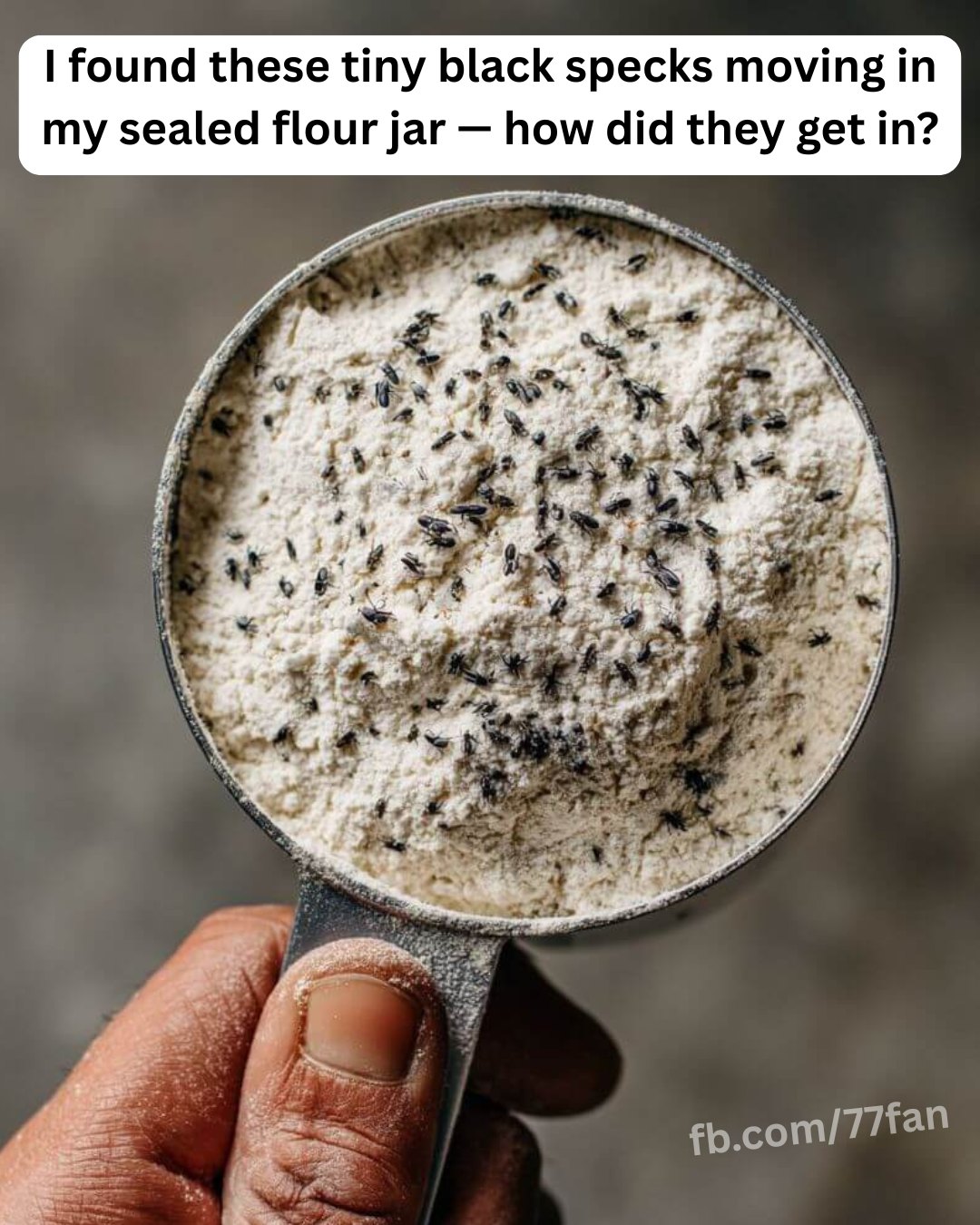
You’re about to bake something—maybe pancakes, maybe a quick loaf of bread—and then you see it.
Tiny black specks. Moving.
Wait… moving?
For a second, you freeze. Because now it’s not just flour anymore—it’s something else. Something you definitely didn’t sign up for.
If this has ever happened to you, you’re not alone. It’s more common than most people think, and no—it doesn’t mean your kitchen is dirty.
But it does mean something is going on behind the scenes.
Let me explain.
So… What Are Those Little Bugs, Exactly?
Those tiny moving specks?
They’re most likely flour weevils.
Small. Dark. Barely noticeable at first—until you really look. They’re usually around 2–3 mm long and blend right into the flour like they belong there.
And here’s the part that surprises most people:
They didn’t show up because your jar wasn’t sealed properly.
They were already there.
The Part Nobody Tells You: They Start Before You Even Buy It
This is where Things get a little uncomfortable.
Flour weevils don’t sneak in after you get home. The process usually starts much earlier—during grain storage or processing.
Adult weevils lay eggs directly on the grain. Those eggs are microscopic, basically invisible. Then the grain gets milled… packaged… shipped… and ends up on your shelf.
Everything looks perfectly normal.
Until one day, those eggs hatch.
And suddenly, your “sealed” flour isn’t so sealed after all.
Wait—So a Sealed Jar Doesn’t Help?
It helps… but not in the way you think.
A sealed container keeps new bugs out. That part is true.
But it doesn’t stop what’s already inside.
If eggs are present—and they often are—they’ll hatch regardless. Even in low-oxygen environments. Even in containers that seem airtight.
It’s a bit like locking the door after someone’s already in the house.
Signs You Might Have a Bigger Problem
Sometimes you see the bugs right away.
Other times… it’s more subtle.
Here’s what to watch for:
A slightly sour or musty smell
Flour that feels clumpy or uneven
Fine web-like strands inside the container
Tiny tunnels or movement when disturbed
If you notice even one of these, it’s worth taking a closer look.
Because once they’re active, they multiply fast.
Be Honest—Is It Dangerous If You Already Ate Some?
Short answer: no.
Longer answer: still no… just unpleasant.
Flour weevils don’t carry harmful diseases, and accidentally consuming a few won’t make you sick.
But taste and texture? That’s another story.
So while it’s not unsafe, it’s definitely not ideal.
What You Should Do Right Away
If you spot them, don’t overthink it.
Just act quickly.
Throw the flour out — seal it in a bag first
Take it outside immediately
Wash the container thoroughly (hot water + soap works well)
Check nearby pantry items — they spread easily
It’s not about being dramatic. It’s about stopping the cycle before it spreads.
Tiny Black Bugs in Your Flour? Here’s What’s Really Going On (And What to Do Next)
The Deep Clean Most People Skip (But Shouldn’t)
Here’s where a lot of people stop too soon.
They toss the flour… wipe the shelf… and move on.
But if eggs or larvae are hiding nearby, the problem comes right back.
For Complete Cooking STEPS Please Head On Over To Next Page Or Open button (>) and don’t forget to SHARE with your Facebook friends
ADVERTISEMENT

