
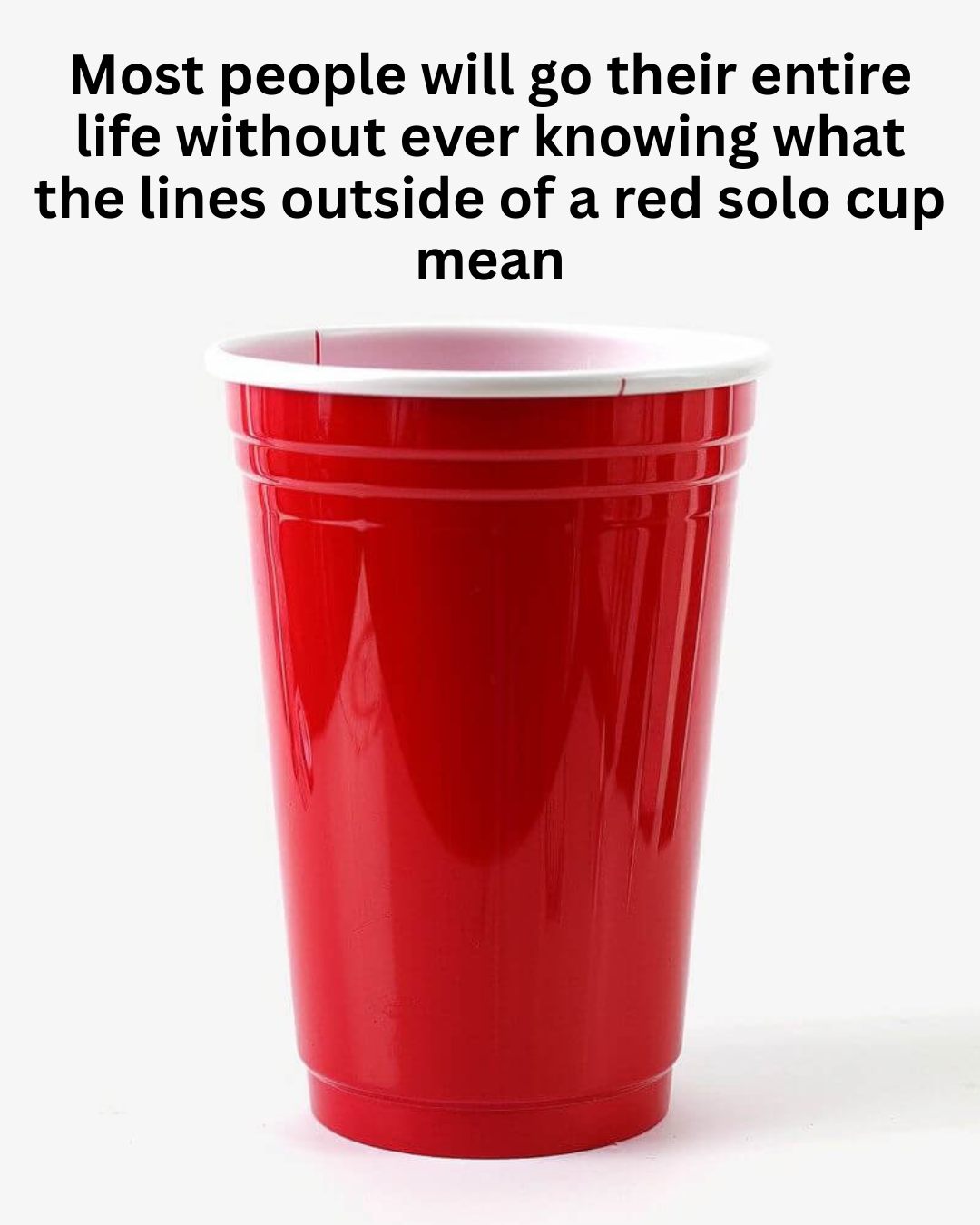
Most of us have held a Solo Cup at some point—at a backyard cookout, a tailgate, a graduation party, maybe just standing around someone’s kitchen island talking long after dinner should’ve ended. It’s one of those objects that almost disappears because it’s so familiar. You grab one, fill it, set it down, forget which one is yours, grab another. Life happens.
But here’s a funny thought: what if one of the most recognizable party staples in America has been quietly hiding a clever little secret this whole time?
Turns out… it kind of has.
Those horizontal ridges wrapping around a red Solo cup? They aren’t just there to make the cup look nice—or to give your fingers something to grip while balancing a burger in your other hand. A lot of people believe those lines double as informal measuring guides. And honestly? Once you notice it, you can’t unsee it.
It’s one of those tiny design details that makes you stop and think, Wait… how did I never know this?
The Cup That Somehow Became a Cultural Celebrity
Not many disposable products become icons. Yet somehow the red Solo cup did.
The story starts with Leo Hulseman, who founded the Solo Cup Company in the 1930s. The company started with pretty humble products—paper cones for water coolers. Nothing glamorous.
Then came the plastic party cup.
By the 1970s, the red version started showing up everywhere. And I mean everywhere.
College parties? Obviously.
Neighborhood barbecues? Of course.
Fourth of July cookouts, block parties, tailgates, family reunions… somehow that bright red cup became part of the scenery.
And maybe that’s why people rarely question its design. It feels too ordinary to hide surprises.
But ordinary objects often do.
Those Lines Aren’t Random—Well, Not Entirely
Let me explain.
For Complete Cooking STEPS Please Head On Over To Next Page Or Open button (>) and don’t forget to SHARE with your Facebook friends
ADVERTISEMENT

