
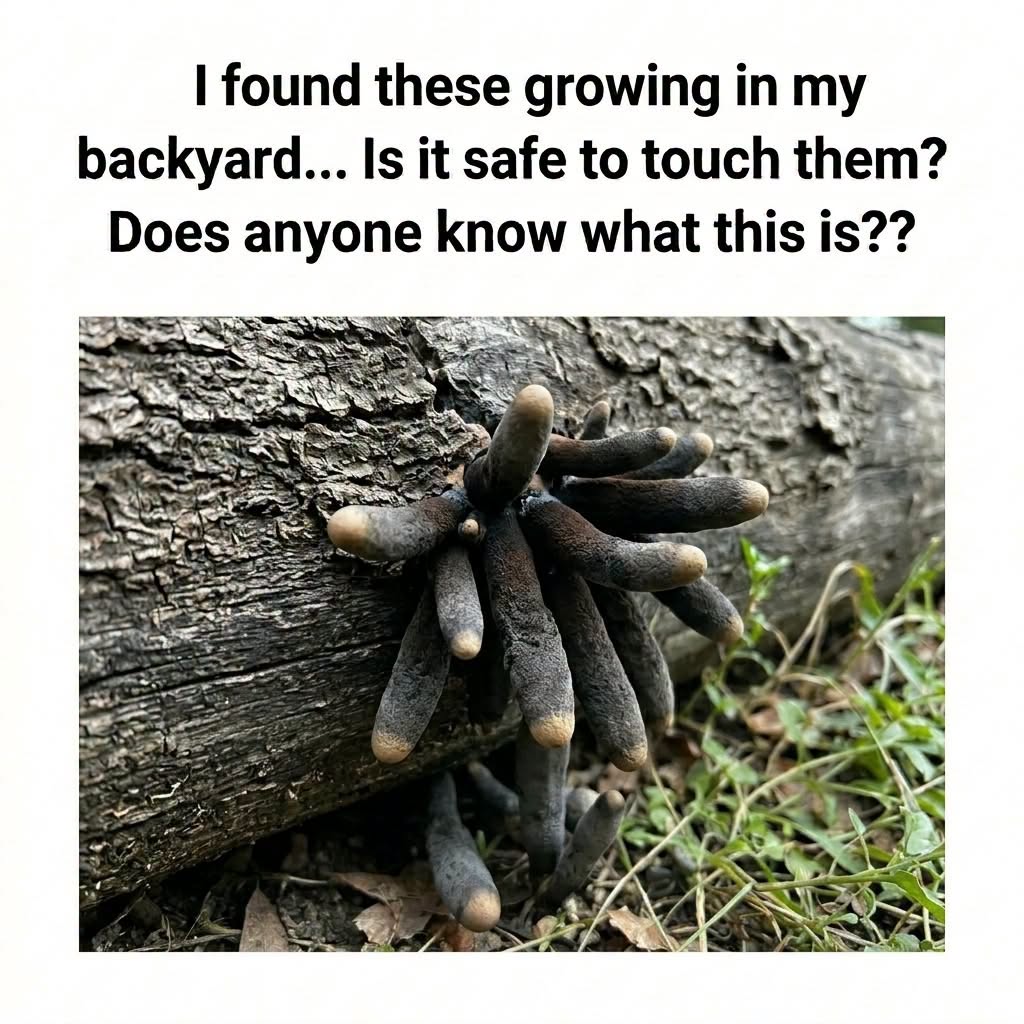
Let’s say you’ve gone for a walk in the woods. Perhaps you’re a little off-track, maybe you’re mushroom hunting or just passing the time, and then—boom. You catch sight of what appears to be a hand clawing its way out of the ground. Real fingers, gnarled and black, cresting through the leaf litter like something out of a terrible nightmare. Your brain immediately switches into horror movie mode. “Oh god. That’s a body.”
Take a deep breath. There is no body.
You’ve just encountered one of the more bizarre and fascinating fungal residents of the forest: Dead Man’s Fingers.
The name is creepy enough, but even the scientific name, Xylaria polymorpha, is somewhat less disturbing than what it happens to look like. I saw it for the first time on a damp and overcast autumn afternoon, with leaves everywhere, slick and half-rotting. As I poked around a rotting stump, I noticed a little tuft of finger-like structures, charcoal-colored, and disturbingly spread out in a human-like way. I froze for a second, took a few steps back, and then crouched down to inspect it more carefully—since curiosity always wins.
If you’ve ever stumbled upon this unsettling fungus, or if you’re just intrigued by the stranger side of nature, let’s explore what these “fingers” really are, why they look so eerily human, and what role they play in the hidden life of the forest.
🖤 So… What Are These Creepy Things?
They’re fungi, of course, but not the kind that shows up in storybooks with bright red caps and cheerful white spots. This stuff does not scream “fairy tale”—it looks more like burnt sausages, dried roots, or, yes, the desiccated fingers of a corpse reaching up from the soil.
The Science Behind the Spookiness:
Feature
Description
Scientific Name
Xylaria polymorpha (and related species like Xylaria hypoxylon)
Common Names
Dead Man’s Fingers, Carbon Antlers, Stag’s Horn Fungus
Appearance
Black, finger-like or club-shaped structures, 1-4 inches tall, often growing in clusters
Texture
When young: soft, pale, and slightly fleshy. When mature: hard, woody, and charcoal-black
Tips
Often lighter in color (gray or white) when young, which adds to the “fingernail” illusion
These fungi grow on dead hardwoods, generally stumps, buried roots, or fallen logs. They sit there doing their thing, slowly breaking down the wood over many years.
The Key Distinction: They Are Not Dangerous
Here’s the most important thing to remember: they do not parasitize living trees. They are saprophytes, meaning they thrive exclusively on dead organic material. They do not hurt living trees. In fact, they are essential recyclers of the forest, slowly breaking down decaying wood and returning nutrients to the soil.
🍂 The Life Cycle of a “Finger”
For Complete Cooking STEPS Please Head On Over To Next Page Or Open button (>) and don’t forget to SHARE with your Facebook friends
ADVERTISEMENT

